When in Bhutan places to visit for the soul seeker

Bhutan radiates a certain blissful aura that is highly appealing to the soul-searcher. From Bhutan’s serene landscapes and calm people to monumental Buddha statues and stately monasteries, the Buddhist kingdom of Bhutan is quickly picking up as a popular tourist destination for cultural as well as pilgrimage travelers.

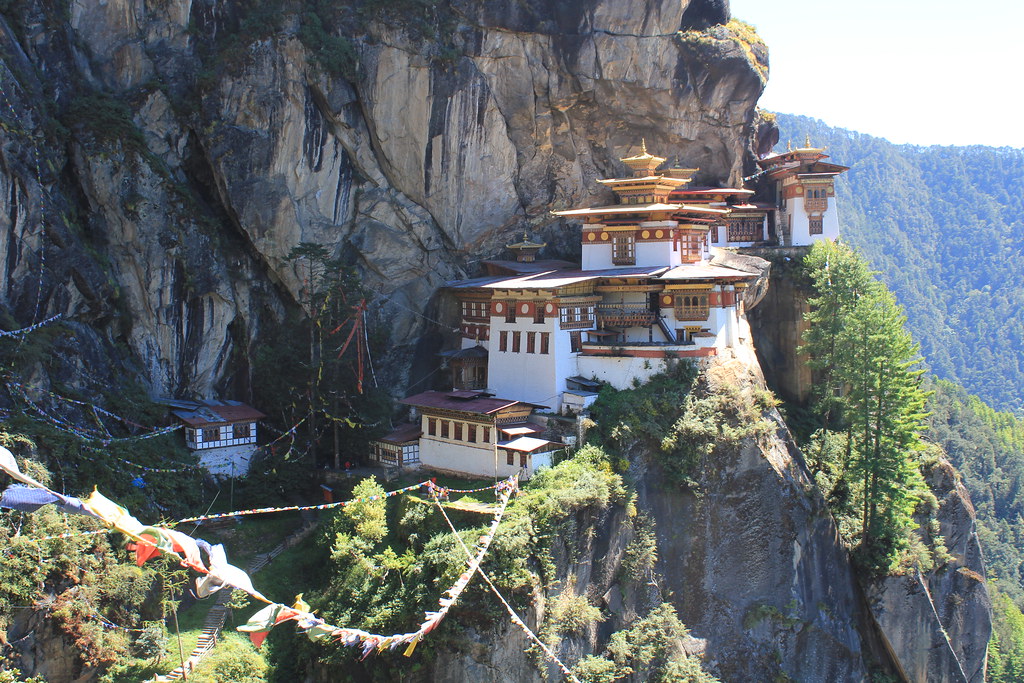
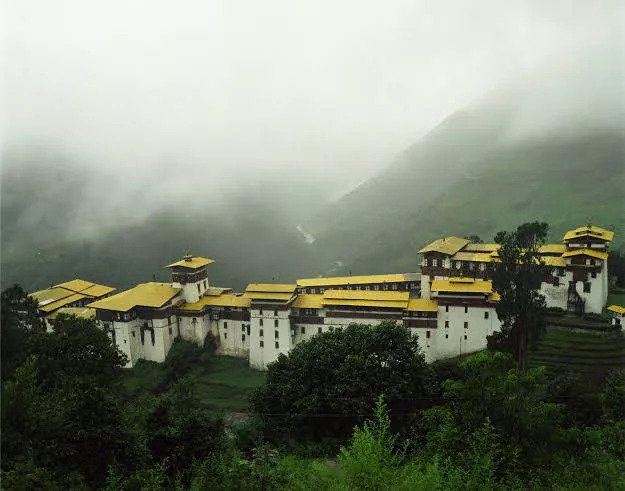
Bhutan has many monasteries and your visit to Bhutan will not be complete without it. It is one of the places in Bhutan that mesmerizes you with the architectural marvel and brings peace to your soul. Monasteries in Bhutan also serve various social purposes such as providing homes to children who are either orphaned or unable to be support by their parents. Some of the worth visiting monasteries in Bhutan are the Chagri Dorjeden Monastery aka Cheri Monastery at the northern end of the Thimphu Valley, the Chimi Lhakhang in Punakha District, Lhodrakarchu Monastery, Paro Taktsang also identified as the Taktsang Palphug Monastery and the Tiger’s Nest located in the cliffside of the higher Paro valley, it is the most famous tourist place in Bhutan. Phajoding Monastery, Tango Monastery, Yongla Monastery, Kurjey Lhakang and Oesel Choeling Monastery are also popular Bhutan places to visit.

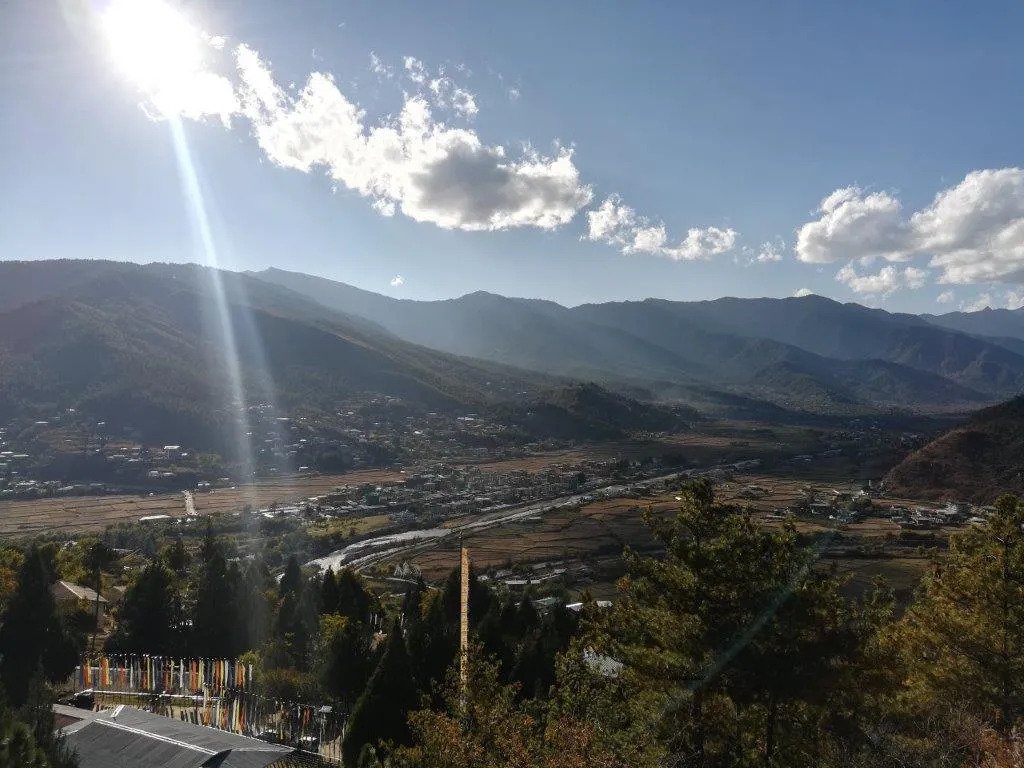
Some other places to visit in Bhutan are the splendid Phobjikha Valley, a vast U-shaped glacial valley in the central part of Bhutan and the beautiful Paro Valley encapsulating within itself a rich culture, scenic beauty and hundreds of myths and legends. The best time to visit any of the places in Bhutan is during summer and winter in the months of March to May and September to December. If you want to be in Bhutan particularly for visiting these amazing monasteries, the best time to visit most of these monasteries is all-year round.  Bhutan is a country blessed with rich culture, heritage and spectacular landscapes, lush green valleys, gigantic mountains, dense forests, clean & fresh water bodies, delicious cuisine and warm people. If you are seeking for tranquility and a form of awakening visit these places in Bhutan and be stunned by what it has to offer.

Read full article at: https://www.tourgenie.com/travel-diaries/travel-blogs/when-in-bhutan-places-to-visit-for-the-soul-seeker
Where is Bhutan and Discovering Thimphu: The Land of Happiness

Where is Bhutan you ask? Bhutan is comfortably tucked in the Himalayan range of South Asia between India, and China. Thimphu, the capital city of Bhutan, is a place to experience royal life as well as the developing sections of Bhutan. This bustling little city, situated in the western central of Bhutan, is the main centre of commerce, religion, and government in Bhutan.

An interesting feature of this place is that the city does not have traffic lights. Instead, policemen on small pavilions can be seen directing traffic. The roads are usually empty, but it’s opposite during the ‘peak hours’. Among the different main cities of Bhutan, Thimphu offers a perfect juxtaposition of old world charm and the hustle bustle of a new commercial exuberance.

You could spend some time in the Memorial Chorten, a stupa built in 1974 in the memory of Bhutan’s third king, His Late Majesty Dorji Wangchuk, who is also regarded as the Father of modern Bhutan. Also, take time to explore the National Library where you can find ancient manuscripts. You will be surprised to witness the level of cleanliness inside the Traditional Medicinal Institute complex. The Bhutanese distinct art form is now portrayed in different textiles at the National Textile museum under the patronage of Her Majesty the Queen Ashi Sangay Chiden. You can get an idea about the different Bhutanese patterns and weaves that have been famous since ages in Bhutan. Another famous place to visit in Thimphu is Tashichho Dzong or the ‘fortress of the glorious religion’ originally built in 1614.

Thimphu is a land of happiness and many festivals are celebrated here. Make sure to be present at Thimphu during one of these festivals to experience the joy and colors of the country. The place will not just stun you with the vibrant and colorful festivals but also with mouth watering and delicious cuisine. The most distinctive characteristic of the Bhutanese cuisine is the spiciness. Bhutanese do not enjoy their meal if it’s not spicy.

Explore this quaint yet colourful valley of Thimphu in Bhutan. Come to Bhutan to celebrate, eat, pray, and create memories to cherish for a lifetime!

Read full article at: https://www.tourgenie.com/travel-diaries/travel-blogs/where-is-bhutan-and-discovering-thimphu-the-land-of-happiness

Bumthang Owl Trek: Best Time to visit Bhutan

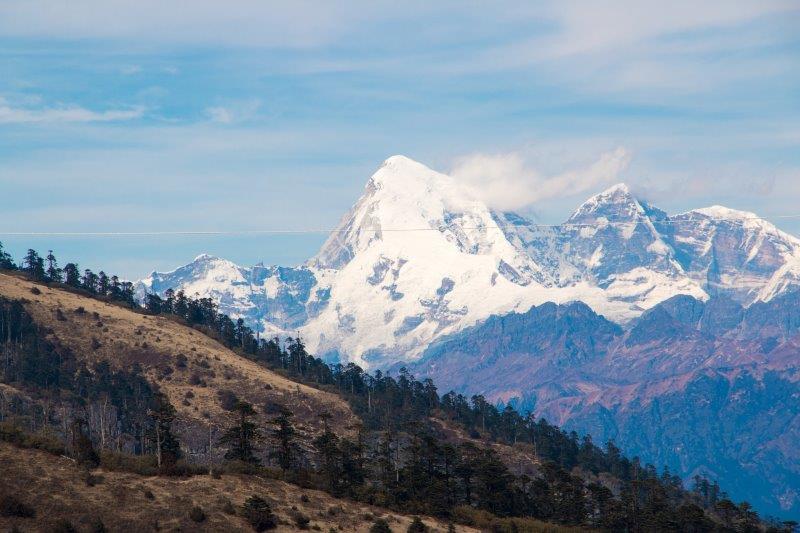
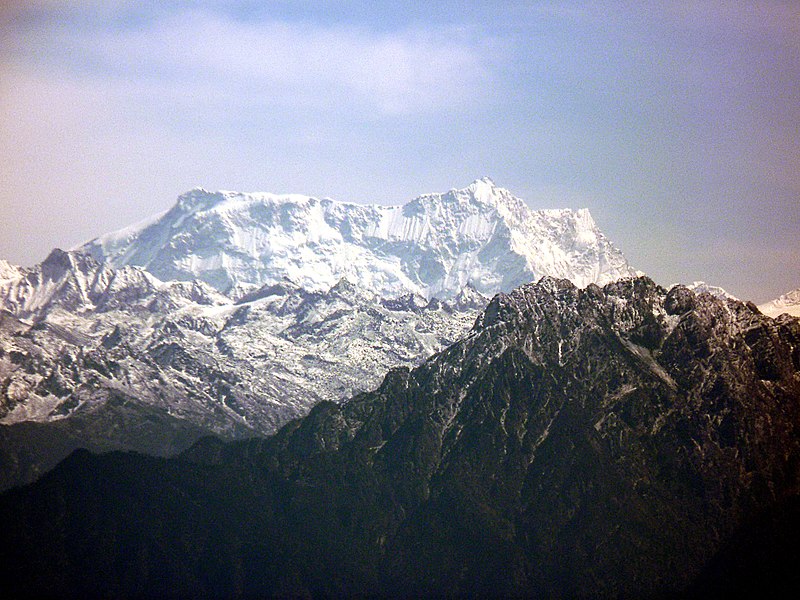
The Bumthang Owl Trek is one of the most sought after treks in Bhutan. It is a 3-day trek around Bumthang (north-central Bhutan) and is great for amateur trekkers t take in the unspoiled landscapes of blue pine, birch, maple, spruce, juniper, bamboo, and rhododendrons,  with opportunities to visit age-old Buddhist temples and monasteries as well as get a glimpse into local village life. All of this and the glorious views of Mt. Gangkar Puensum, which is the highest unclimbed peak in the world. The best time to visit is in the months of April and May when rhododendrons are in full bloom. Trekking through this area in autumn is a different experience altogether as there is a possibility of encountering Himalayan black bears.  For culture lovers, the best time to visit Bhutan is during the local festivals.

The trek begins at the Manchugang village and passes through the Dhur Village of the nomadic Kheps and Brokpas. The trek continues with an uphill climb through a forest of blue pine, juniper and hemlock towards the campsite at Schonath (3450m). The otherwise silent nights here are punctuated by the hooting of owls, hence, the name ‘The Owl Trek’. The following day, the trek traverses lush forests to arrive at the Drangela Pass. The day ends at a campsite at the Kitiphu Ridge (3870m), from where Mt. Gangkar Puensum (7541m), the highest unclimbed peak in the world, is clearly visible. On the final day, the trek takes you on a descending path towards the monasteries of Zambhalha, Chuedak, and Tharpaling of which Chuedak monastery is the most unusual in Bhutan, having 100 Avoloketeshvaras in the form of Chukchizhey (eleven heads) that is seen nowhere else in Bhutan. By afternoon, the trek moves along the ridge of Kikila and follows the traditional trek route between Trongsa and Bumthang (the Royal Heritage Trail) to arrive at the Jakar Dzong, which marks the end of the Bumthang Owl trek.

The trek is perfect for amateurs and graded as easy, so first-timers can definitely try this. Every trek in Bhutan is accompanied by a guide, cook, camping assistant, and a few horsemen and horses to carry gear and the Owl Trek is no different. The maximum elevation that is reached during the trek is 4000m (13123 feet above sea level). Make sure to wear hiking boots, all-terrain clothing and carry a sleeping bag, water-bottle, first-aid kit, and a de-hydration kit as essentials.

To know more about this trek in details, read here: https://www.tourgenie.com/travel-diaries/travel-blogs/bumthang-owl-trek-best-time-to-visit

Bhutan best time to visit

Known as the land of the Thunder Dragon, the tiny Himalayan kingdom called Bhutan is shrouded with mystery and mysticism for the outside world. Bhutan is a paradise for tourists, landscape coupled with monasteries, temples, and other Buddhist places, exude solace and tranquility. The past few years has seen an unprecedented number of tourists visit Bhutan especially from India.

The Bhutan’s landscape ranges from lush plains and captivating valleys to high passes and rugged snow-capped Himalayan Mountains. This country has a total of 71% forest cover. For the tourist seeking to enjoy the beauty of Bhutan, the country offers a number of trekking routes, hiking trails, cycling paths, picnic spots, and rejuvenating hot springs. Spring (early March-mid-June) is the best time to visit Bhutan, when the valleys are filled with flowers. For those seeking adventure, Bhutan has some thrilling activities such as whitewater rafting, kayaking, rock climbing, fishing, and more. 

 The best time to visit Bhutan for cultural experiences is during festivals. Some interesting festivals to attend in Bhutan are the Matsutake Festival, Haa Summer Festival and Sakteng Festival. Held in the beautiful Ura Valley, Matsutake is a festival for foodies, more specifically for those who love mushrooms. This festival is aimed at spreading awareness about the sustainable harvesting of local mushrooms and promoting the organic harvesting. A highlight of this festival is a mushroom picking excursion. This festival is held in August in Bhutan. The colorful Haa Summer festival of Bhutan is a cultural treat for those visiting Bhutan to gain insight into traditional Bhutanese culture. The festival celebrations cover dances, songs, sports, and local cuisine and takes place in July in Bhutan. Sakteng festival is celebrated by the Brokpas, a semi-nomadic settlement. Visitors can look forward to enjoying local folk music, dance, and free-flowing ar a (local wine). A highlight is the performance of the popular yak dance and Ache Lhamo dance. This festival takes place in the month of June in Bhutan.

If you’re planning a trip to Bhutan best time to visit is between March-May and November-mid February. Visit this beautiful country for a unique cultural experience.  

Read full article at: https://www.tourgenie.com/travel-diaries/travel-blogs/bhutan-best-time-to-visit

Bhutan Tigers Nest

Traveling to Bhutan and not visiting the iconic Tiger’s Nest in Paro is a cardinal sin. For those who do not know, let this be your introduction to the fascinating Paro Taktsang perched precariously at a height of , 10,000 feet above sea level  in the cliffs in upper Paro Valley, Bhutan. This iconic tourist attraction was once engulfed by a mysterious fire but has been completely restored to its former glory and is by far, the most visited in Bhutan. This place is sacred to the Buddhists housing a monastery, and is so particularly to the Vajrayana sect.

There is an interesting tale revolving around its origins. It is believed that Padmasambhava, also known as Guru Rinpoche, who was an 8th-century Buddhist master from India and also believed to be a re-incarnation of Buddha himself, landed at Tiger’s Nest, Bhutan, on a flying tigress. He then began meditating in a cave for 4 months. It is believed that he subdued the local ‘demons’ and began the conversion of the people of Bhutan to Buddhism.

To reach the main complex, one has to undertake an arduous trek of about 2-3 hours, from the valley floor to reach the entrance of the monastery. That is why it is referred to as a ‘nest’. Mid way up, one reaches the iconic spot from where people take the customary picture with the monastery in the background. There is also a canteen there where one can have lunch. Till here, a horse can be hired, but here onwards, the journey has to be completed on foot. From the entrance, there are 700 stone steps carved into the cliff face that lead up to the monastery. Inside the monastic complex are several caves, lhakhangs, sacred objects, drubchus (holy water), and Tshogyal Pangchung (the lawn of Khandro Yeshe Tshogyal). There is also a cold cave where Padmasambabva is said to have meditated. Besides the captivating monastery, the view of the valley from up there is surreal.

There is more to know about this mystical place. Read more here: https://www.tourgenie.com/travel-diaries/travel-blogs/bhutan-tigers-nest

5 Things To Do In Thimphu Bhutan: Places To Visit

Bhutan, the land of the “Thunder Dragon”, offers subtropical plains to steep mountainous regions and deep valleys, all in a serene atmosphere. No wonder throngs of foreign tourists flock this Himalayan kingdom.  An ideal time to visit Bhutan is during its spring-summer months (Mar-May) when the weather is pleasant and the skies are clear whereas October is ideal for trekking. Some of the hot tourist destinations here are Thimphu, Paro, Punakha, Haa Valley, and Pheuntsholing.

Among all of these, Thimphu is perhaps the most interesting. It is the capital of Bhutan, located on the western part and is a wonderful juxtaposition of ancient tradition and modernity seen through its monasteries and traditional houses that stand alongside modern shopping complexes and night clubs. Thimphu has a number of exciting tourist worthy spots to offer that give a traveler an insight into the uniqueness of the arts and culture of Bhutan. Here is our list of 5 such places:

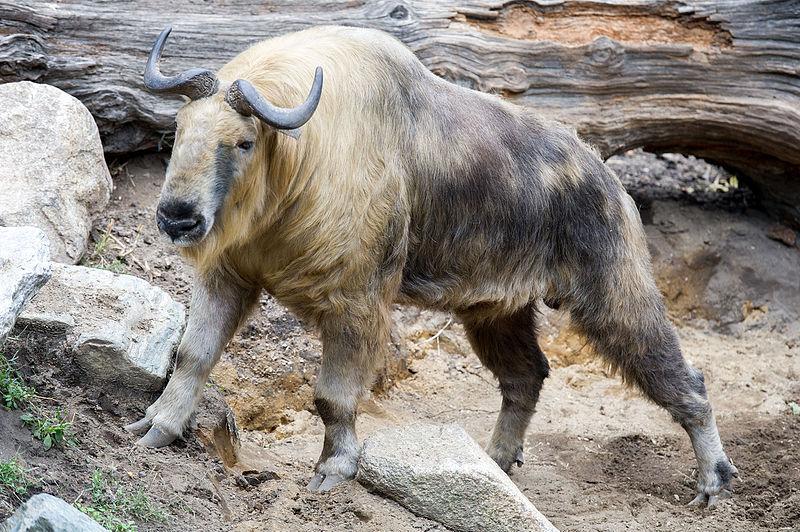
  • Motithang Takin Preserve – See the unusual-looking Takin, the national animal of Bhutan, which is a cross between a goat and an antelope in this enclosed forested habitat located at the edge of Thimphu.
  • Simply Bhutan – A unique project with the aim to conserve the culture and traditions of Bhutan while generating employment opportunities for young job seekers.
  • Buddha Dordenma statue – The most iconic location of Thimphu is the gigantic Shakyamuni Buddha statue seated amidst the ruins of Kuensel Phodrang, the palace of Sherab Wangchuck, overlooking the southern approach to Thimphu
  • Jungshi Handmade Paper Factory – Make some Deh-sho (local paper) here which is made from daphne and dhekap trees, indigenous to Bhutan and make a unique souvenir too.
  • Royal Textile Academy of Bhutan – It is dedicated to the conservation of Bhutanese textiles and showcases the traditional art of weaving in Bhutan and serves as a training center for local individuals.

Read the full article at: https://www.tourgenie.com/travel-diaries/travel-blogs/5-things-to-do-in-thimphu-bhutan-places-to-visit

Food Of Assam- Eat Like A Local

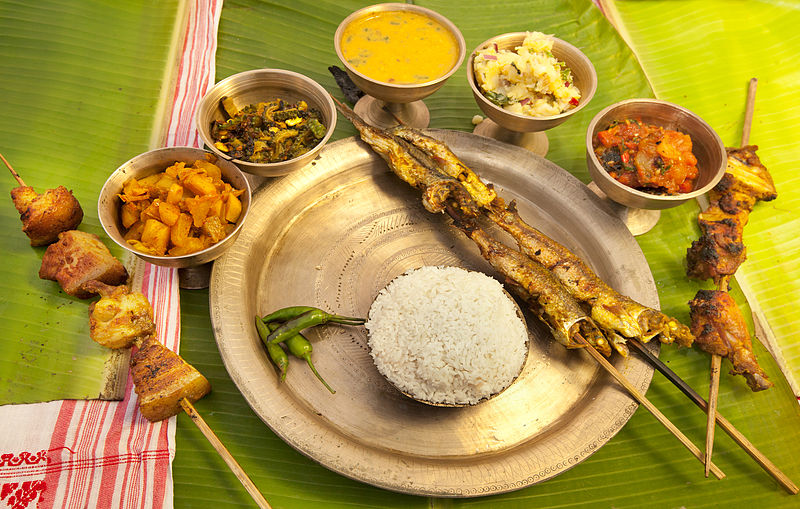
When in Rome, be like the Romans, goes the saying. This applies to any geography. If you have not yet been to Assam, then this is to encourage you to travel to and try your hands at local delicacies while you are there. A typical Assamese meal consists of rice, lentils, masor jool (fish stew), mangsho (meat stew), and stir-fried greens or herbs and vegetables. There is a liberal use of both fresh and fermented ingredients in this style of cooking. The two main characteristics of a traditional meal in Assam are khar (named after the principal ingredient) and tenga (preparations with a rich and tangy flavor). Assamese love their mutton, fowl, duck/goose, fish, pigeon, pork, and beef  and even the exotic foods like grasshoppers, locusts, silkworms, snails, eels, squab and other birds, which are eaten in moderation.

An interesting ingredient of Assamese food is khorisa (fermented bamboo shoots) which are used to flavor curries or made into pickles. Koldil (banana flower), Ouu (elephant apple) and squash are also widely used. The star of Assamese food is fish like the Boralí, rou, illish, or chitol to name a few. Communities also brew traditional alcoholic drinks like Laupani, Xaaj, Paniyo, Jou, Joumai, Hor, Apang, etc. which are intrinsic to local hospitality.

Interesting local food of Assam worth trying are:

  1. Lai xaak – Leafy greens (saags) cooked with pork is an unusual yet delicious combination enjoyed by the Assamese people.
  2. Dal Kosu Xaak – Green leaves cooked with lentils to a creamy consistency.
  3. Sunga Chicken – Spiced minced chicken cooked inside a bamboo hollow.
  4. Jute Leaf Curry – An interesting curry made from puree of fresh jute leaves
  5. Ouu Katha – A sweet and sour chutney prepared using Ouu (elephant apple)
  6. Kumurat diya Hanhor Mangxo/Duck meat curry – Duck meat is cooked with ash gourd
  7. Silkworms – spiced and deep-fried silkworms is a delicacy
  8. Baanhgajor Lagor Kukura – A curry made of chicken, lentils and bamboo shoots
  9. Masor Tenga – A sour and tangy fish curry with mangosteen, accompanied with rice and a staple of Assamese kitchens

And many more. Go on an exciting culinary journey by trying out authentic Assamese food at the local markets. Read full article here: https://www.tourgenie.com/travel-diaries/travel-blogs/food-of-assam-eat-like-a-local

Explore Kaziranga National Park Assam

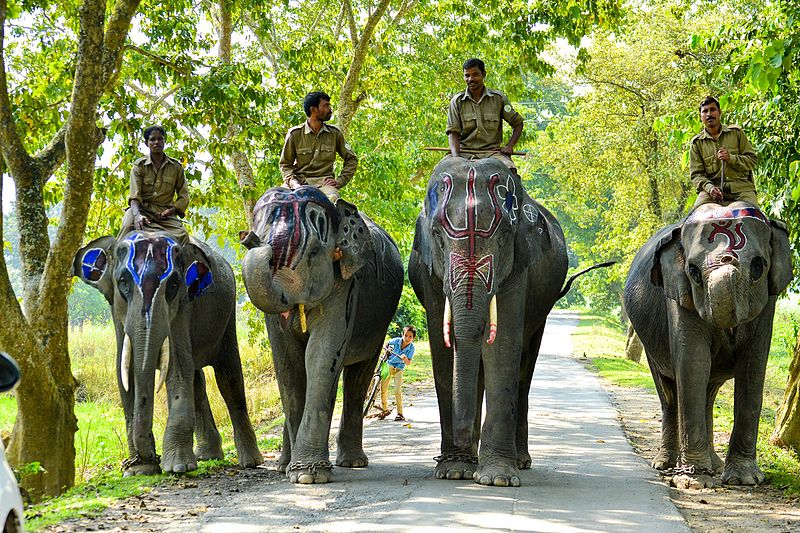
Are you a wildlife lover? Do you love to explore new places and experience new cultures? Then Assam is the place to go. Blessed with an abundance of national parks like the Manas National Park, Kaziranga National Park, Orang National Park, Nameri National Park, and Dibru-Saikhowa National Park, it is a wildlife lover’s dream destination. Among the many, Kaziranga National Park, Assam is the most popular. It is spread over an area of 430 sq km, is the habitat of the world’s largest population of one-horned rhinoceroses as well as many mammals including tigers, elephants, panthers, and bears.  Kaziranga National Park, Assam, is also home to thousands of bird species. No wonder, Kaziranga National Park, Assam, was declared a World Heritage Site by UNESCO for its unique natural environment.

Kaziranga National Park is about a 5-hour drive from Guwahati in Golaghat in the Nagaon district of Assam. There are many hotels, lodges and, resorts in Kaziranga that you can check into a day before your safari, which tends to start early in the morning. If you are an early riser, do opt for the Elephant safari which begins as early as 5 am. If not, you can always get on a jeep safari which is equally exciting. The park is divided into 4 zones and the jeep takes you through them all. The safaris are regulated and controlled by the Forest Department (Government of Assam) and can be booked through them directly or through travel agents, or even hotel desks.

The next day you can enjoy a scenic drive along, and a ferry ride across the Brahmaputra river to visit Majuli, the cultural capital of Assam and also the largest river island in the world. It is home to tribals with a unique culture. You can experience this through a visit to the Satras, institutional centers for the preservation of traditional indigenous practices and culture of the Assamese society, which is still practiced here. You can spend the night at a homestay to accentuate your cultural immersion with good hospitality.  You can choose to return back to Kaziranga the next day and take a spa day at some wonderful resorts here before you head back or take a longer drive down to Guwahati and spend the evening indulging in shopping for souvenirs and local goodies.

You can plan an exciting trip to Kaziranga. Know more here: https://www.tourgenie.com/assam-tour-packages/explore-kaziranga-national-park-assam

Kamakhya Mandir in Guwahati to Wonderful Meghalaya

Have you ever wanted to go on a holiday that fulfills your parent’s religious wants, your brother’s thirst for adventure and your love for serene picturesque locales? Then a trip to Guwahati, Shillong and Cherrapunjee will do the trick.

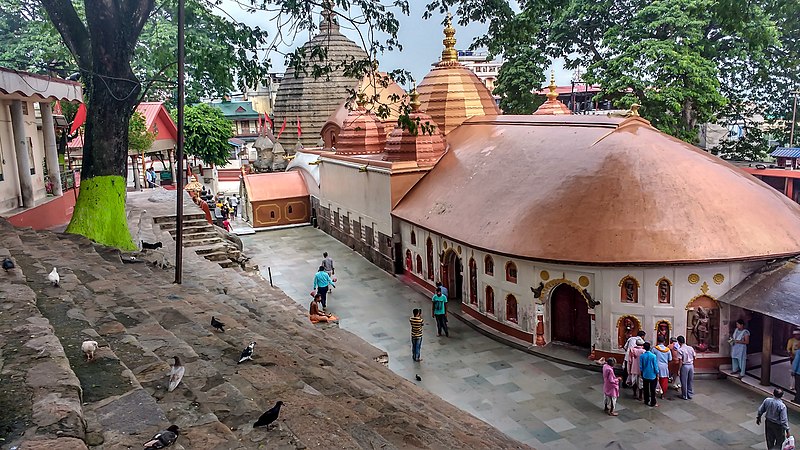
Begin as most of the trips to North-East India do, at Guwahati, which also happens to be the ‘City of Temples’ and the largest metropolis in North-East India. The main attraction for anyone visiting Guwahati is Kamakhya Mandir, a 16th-century temple complex dedicated to Goddess Kamakhya. The best time to visit Kamakhya Mandir, Guwahati, to see a special occurrence in this temple, is in June, when the river turns red around the temple. There are many other temples in and around Guwahati like the Umananda Temple on Peacock Island which is dedicated to Lord Shiva, The Bhimasankar Jyotirling temple ot the recent addition of the Sree Balaji Temple. You can also enjoy a visit to the Assam State Zoo cum Botanical Garden, which is the largest of its kind in the North East region and is spread across 432 acres or take a delightful evening cruise on the Brahmaputra. You can also choose to indulge in some od fashioned shopping at Paan Bazaar.

The next day, you will take a scenic drive down to the hill station of Shillong. En-route, you will visit the Umiam Lake, a delightful man-made lake with amazing views. On reaching Shillong you can visit the Nan Polok or Ward’s Lake, Lady hyderi Park and the Don Bosco Musuem. There is also an amazing Butterfly Museum, if that interests you. In the evening, you can shop for souvenirs or local goodies at the Police Bazaar.

The next day, head towards Cherapunjee, which once was the wettest place on earth. En-route, visit the fourth highest waterfall in the world, Nohkalikai Falls, Elephant Falls, Shillong Peak, and Mawkdowk view point where you can go for zip lining if you choose to. Later visit more exciting places like the Seven Sister Falls, Dainthellen Falls , Eco Park and, the Mawsmai Cave and  Arwah Cave which involve a bit of short trekking. You can then return back to Shillong from where you can proceed towards your onward destination the next morning.

You can plan an exciting trip to Kamahya, Shillong and Cherrapunjee. Know more here: https://www.tourgenie.com/assam-tour-packages/leisure-tour-to-kamakhya-shillong-cheerapunjee

The mesmerising Phobjikha Valley

Bhutan’s beautiful landscape is made of sub-alpine Himalayan Mountains, valleys, meadows, rivers, and sub-tropical plains. Landlocked in the Eastern Himalayas, most of the population of Bhutan is centralized in valleys and lowlands. There are a total of 21 valleys in Bhutan and Phobjikha valley is one of them.

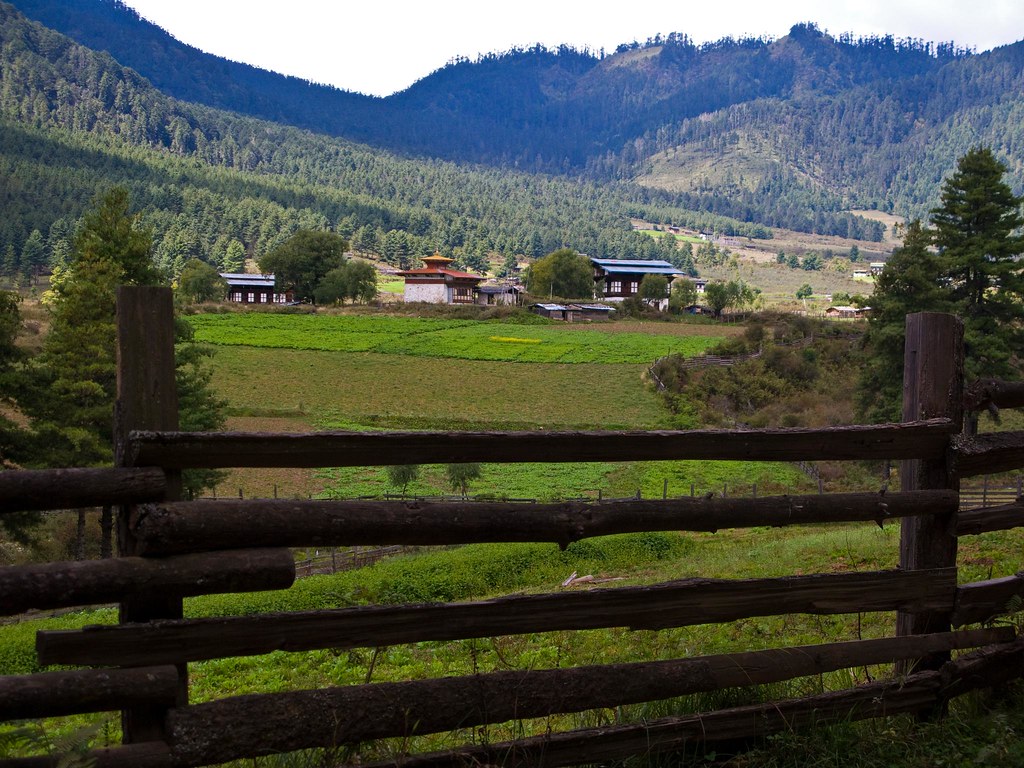
Phobjikha Valley is surrounded by mountains and lush greenery. The place is known for its beautiful landscapes and passes. It offers beautiful landscapes ideal for walking and hiking. Also known as Gangteng Valley, Phobjikha Valley is a huge U-shaped glacial valley. Every year, black-necked cranes, an endangered bird species, migrate to Phobjikha Valley in the winters. This has earned the valley the name “Valley of black-necked cranes.”  Every year a 9-day festival is held in Phobjikha Valley to celebrate the arrival of the black-necked cranes to the valley. This festival is celebrated at Gangtey Goenpa and is one of the few festivals where you can witness cham(religious dances) and the hanging of a thondrol (large religious painting).

There are many places to visit and explore at this valley and some of them are the Gangtey Monastery, Kumbhu Lhakhang, Nyelung Drachaling, Khewang Lhakhang, Damcho Lhakhang etc. The Gangtey Monastery is located not very far from the valley and is one of the largest monasteries in Bhutan. Kumbhu Lhakhang is dedicated to a deity of the ancient Bon religion Sipey Gyalpo. This lhakhang is also a meditation center. Khewang lhakhang is the oldest lhakhang in Phobjikha Valley dating back to the 15th century located in the east side of valley. Nyelung Drachaling is a 14th Century Buddhist temple. The temple age-old relics such as thangka painting whose back bears the handprints of Longchenpa printed in his own nose blood, a golden statue made in Longchenpa’s own image, a fossilized horse’s tooth, and an iron skillet made by Pema Lingpa, with his thumbprints in it. Other places you can visit in Phobjikha valley are Jomolhari, Gangtey Nature Trails and Hikes and Black-Necked Crane Information Centre. Phobjikha valley looks like the valley of dreams and you must include this place in your itinerary.

Read full article at: https://tourgenie.com/travel-diaries/travel-blogs/the-mesmerising-phobjikha-valley