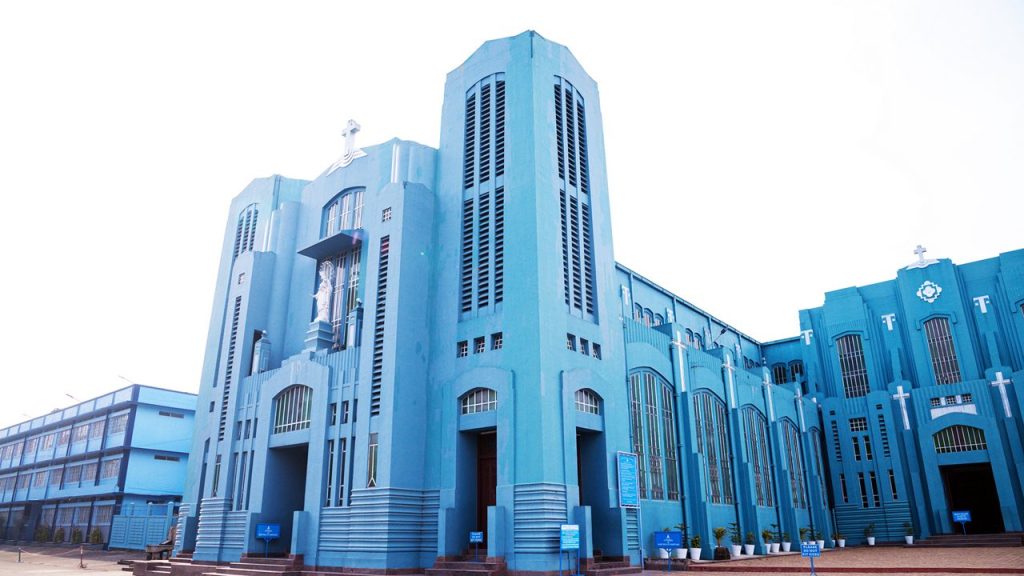
Visit this architectural marvel in Shillong- Cathedral of Mary Help of Christians

The Cathedral of Mary Help of Christians in Shillong is one of the most prominent and revered landmarks in Meghalaya. Perched on a peaceful hill in Laitumkhrah, this striking blue cathedral is the principal church of the Roman Catholic Archdiocese of Shillong and a major centre of faith for the region’s Christian community. Built in 1936, the cathedral stands on the site of the first Catholic church in Shillong, which was destroyed in the great earthquake of 1934.

Architecturally, the cathedral is known for its beautiful arched design, stained-glass windows depicting scenes from the life of Christ, and a serene interior that invites quiet reflection. Its towering structure, combined with simple yet elegant aesthetics, gives it a timeless presence amid Shillong’s rolling hills. The church complex also houses a revered shrine dedicated to Mother Mary, attracting thousands of devotees each year.

Beyond its religious importance, the cathedral offers panoramic views of the surrounding valley, making it a peaceful haven for travellers. The calm, well-kept grounds and the gentle glow of candlelight inside add to the contemplative atmosphere.

For visitors exploring Shillong, the Cathedral of Mary Help of Christians is not only an architectural gem but also a place of history, devotion, and spiritual solace.

Explore more places to explore in Shillong City: https://tourgenie.com/blog/leisure/top-places-to-visit-in-shillong-for-a-memorable-vacation
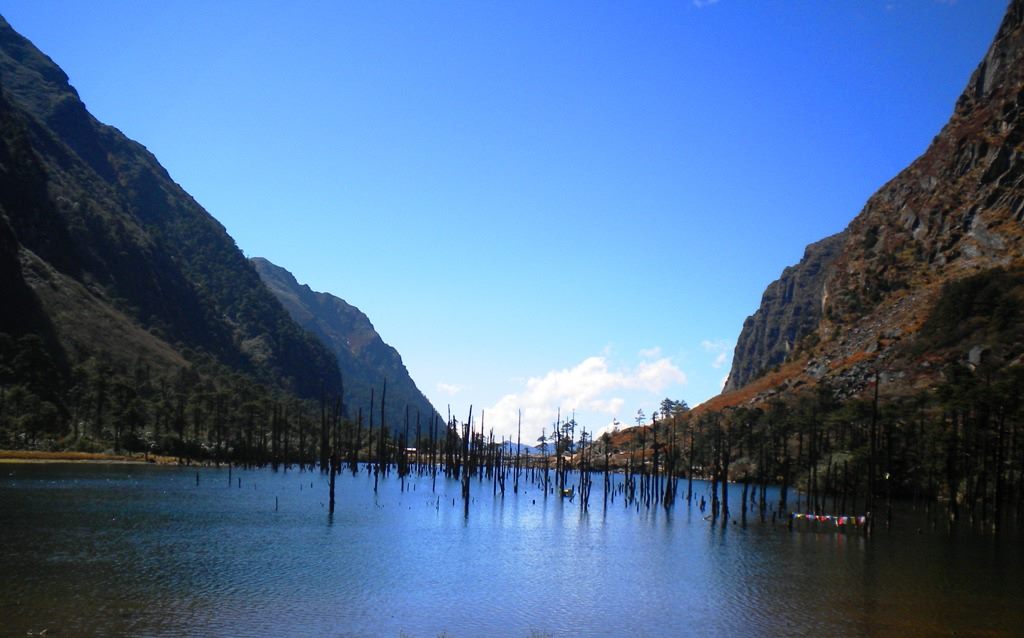
Discovering Madhuri Lake: A Himalayan Wonder in Tawang

Madhuri Lake, officially known as Sangetsar Lake, is one of the most captivating high-altitude lakes in Arunachal Pradesh. Located near Tawang at an elevation of about 12,000 feet, the lake is surrounded by towering mountains, pine forests, and a landscape that feels untouched by time. Its unusual beauty comes from the partially submerged tree trunks that rise from the water, creating a dramatic and almost surreal scene.

The lake gained the popular name Madhuri Lake after the Bollywood film Koyla was shot here in the late 1990s, featuring actress Madhuri Dixit. Since then, it has become a sought-after destination for travelers exploring the Tawang region. The journey to the lake itself is a memorable experience, with winding mountain roads, sweeping valley views, and occasional encounters with yak herds.

Apart from its cinematic charm, Madhuri Lake holds spiritual significance for the Monpa community and is maintained by the Indian Army, adding to its sense of serenity and protection. Visitors often describe the atmosphere as peaceful yet awe-inspiring, thanks to the crisp mountain air and the quiet stillness of the water.

For travelers seeking natural beauty, tranquility, and a glimpse of Arunachal’s rugged Himalayan landscape, Madhuri Lake is an unforgettable highlight.

Read about other worthwhile places to visit in Tawang: https://tourgenie.com/blog/leisure/6-spectacular-places-to-visit-in-tawang-in-arunachal-pradesh

The legend behind Bhutan’s Tiger’s Nest

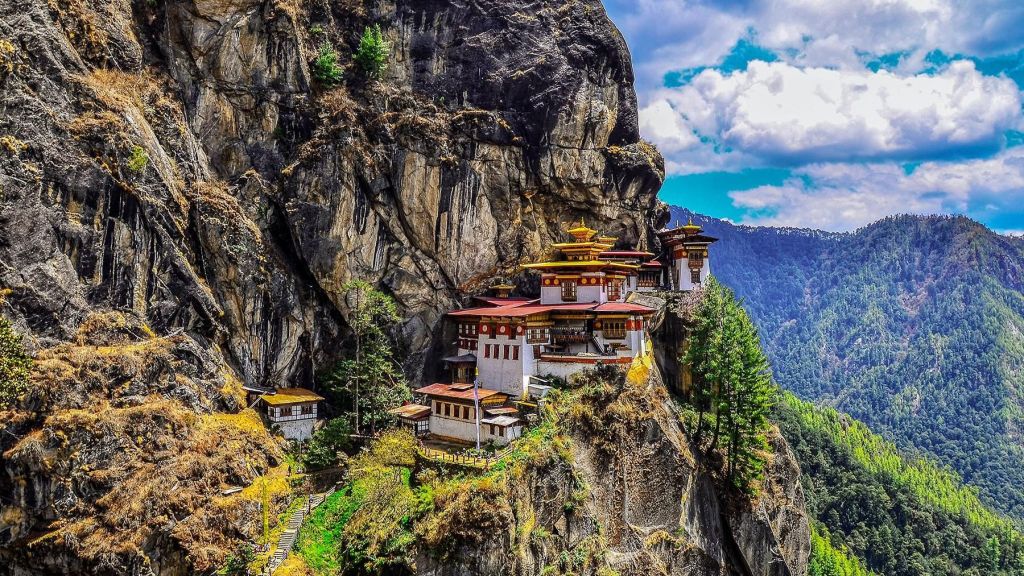
The Tiger’s Nest Monastery, or Paro Taktsang, is one of Bhutan’s most iconic spiritual sites, wrapped in myth and awe. According to legend, the sacred cliffside temple was blessed by Guru Padmasambhava (Guru Rinpoche), the revered figure who brought Buddhism to Bhutan in the 8th century.

Legend says that Guru Rinpoche flew to this sheer cliff on the back of a tigress, believed to be a miraculous transformation of one of his consorts. He meditated in a cave on the cliff for three months, subduing demonic forces that hindered the spread of Buddhism in the region. After achieving victory, he blessed the land, making it a powerful spiritual site.

Centuries later, in 1692, the monastery complex was built around the sacred cave, clinging dramatically to the rock face over 3,000 feet above the Paro Valley. Even today, the trek to Tiger’s Nest is considered a form of pilgrimage — a journey of endurance, reflection, and devotion.

The legend of Tiger’s Nest embodies courage, transformation, and spiritual awakening, which is why it remains one of Bhutan’s most treasured symbols and a place where myth and mountain meet in breathtaking harmony.

Read more about this monastery here: https://www.tourgenie.com/blog/history-and-heritage/the-cliff-hugging-tigers-nest-of-bhutan

Visit Hajo in Assam for a historic-religious experience

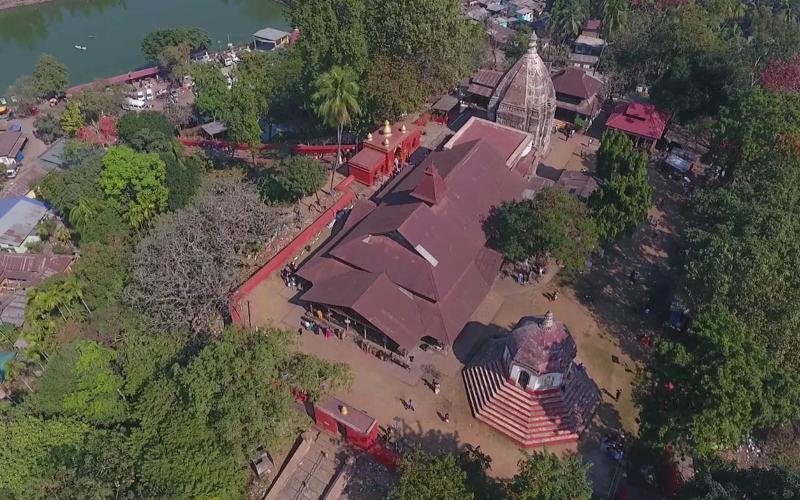
Hajo, located about 25 kilometers from Guwahati in Assam, is one of the region’s oldest and most culturally significant towns. Known for its unique blend of Hinduism, Islam, and Buddhism, Hajo stands as a symbol of harmony and shared heritage in Northeast India. Its sacred sites attract pilgrims from across the country, each finding spiritual meaning in its ancient temples, serene ghats, and historic monuments.

One of the most prominent landmarks in Hajo is the Hayagriva Madhava Temple, perched atop Monikut Hill. Believed to date back to the 6th century, this temple is revered by both Hindus and Buddhists — with some legends linking it to the birthplace of Lord Buddha. The temple’s sculpted stone walls, intricately carved figures, and panoramic views of the Brahmaputra Valley make it a must-visit.

Another important site is the Poa Mecca, a revered Muslim shrine believed to contain soil brought from Mecca, earning it the name “quarter Mecca.” This centuries-old dargah attracts devotees seeking blessings and peace.

Hajo’s charm also lies in its traditional brass and bell-metal craftsmanship, which has been a local specialty for generations. With its rich history, spiritual significance, and artisanal culture, Hajo offers a meaningful and immersive experience for every traveler.

More interesting places to visit in Assam: https://tourgenie.com/blog/leisure/tourist-places-in-assam

Tiger Hill: Darjeeling’s popular viewpoint

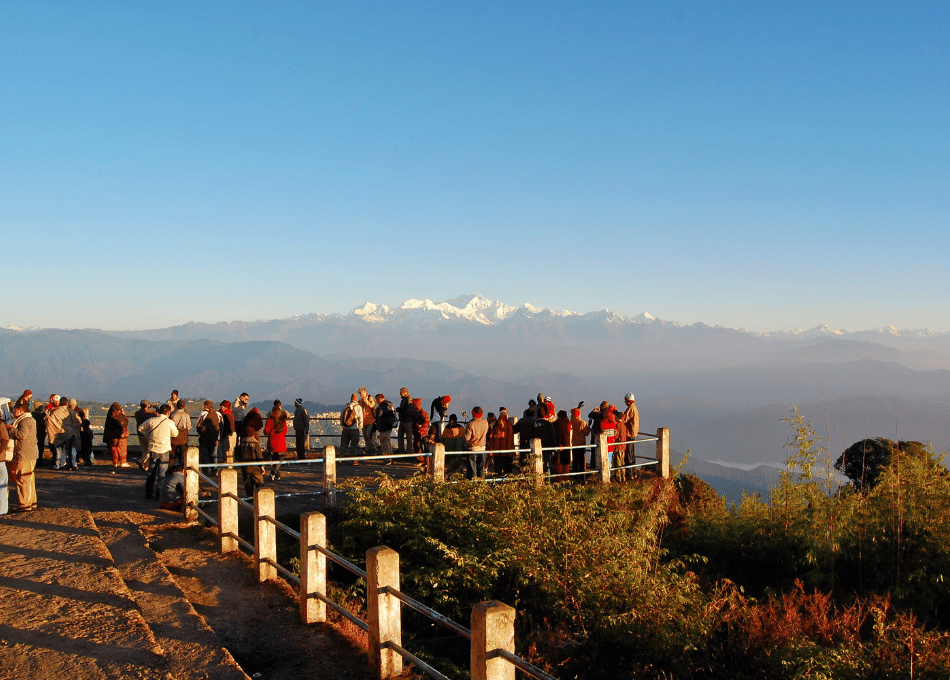
Tiger Hill is a famous viewpoint which lies inside the Senchal Wildlife Sanctuary in Darjeeling. This vantage point offers magnificent panoramic views of the Himalayas including Mt. Everest and Mt. Khangchendzonga (the 3rd highest peak in the world).

Visitors come here to enjoy the sunrise and how it gradually lights up Mt. Khangchedzonga in golden light. Only on a clear day can you view Mt. Everest and the surrounding peaks.

You can avail telescope services here where for Rs 50 per person you can view the snowy peaks up close. The telescope provider will inform you of all the names of the peaks, so you feel like a pro at the end.

If you want a first-row spot to watch this spectacular sight, you need to be there as early as 4:00 am (the sun rises around 6 am) otherwise you’ll just end up looking at the heads of the tourists.

While you wait in the freezing cold, you can buy a cup of tea from the tea vendors that appear magically. And also get a free star show as you can witness shooting stars in the dark sky at that time.

Book a shared or private cab a day previous.

Other interesting places to visit in Darjeeling: https://www.tourgenie.com/blog/leisure/places-to-visit-in-darjeeling

Why booking through a travel agent is a good idea

Why do you need travel agents when you can book everything online? Well, for starters, you don’t have to spend hours on the internet reading a gazillion articles on the destination, skimming through every review trying to decipher real from fake ones, and figuring out which one is a trustworthy service provider who might not ditch you last minute. The real challenge is during peak seasons when hotels inform you of canceled rooms due to overbooking, cab drivers don’t pick up calls, and you are paying more than you had agreed on for minimal comfort.

Travelling to Northeast India? Then you have other challenges like road and weather conditions that can cause travel delays or last-minute cancellations, obtaining permits for entering a state or for sightseeing, constant network issues, and getting reliable accommodations (5-star hotels are not the same in the hills).

So, if you want a hassle-free holiday at just a fraction higher cost than what you’ll be paying anyway, then book your holiday through a travel agent. But not just any travel agent, a ‘government-registered’ one that you can easily find on the official government tourism portals of each state.

Thinking of a holiday to Sikkim this December to see the snow? Read this helpful article:   https://www.tourgenie.com/blog/leisure/travel-agents-in-sikkim-who-help-you-go-nomad

Pashupati Market – A Vibrant Stop on the Road to Mirik

Nestled along the scenic route from Darjeeling to Mirik, Pashupati Market is a lively and colorful stop that perfectly captures the essence of local life in the hills.

Located near the India-Nepal border, one has to cross to the Nepal side by showing Identity proof.

Travelers often pause here to stretch their legs, explore the stalls, and immerse themselves in the local flavors. The market is famous for its fresh vegetables, fruits, and regional spices, making it a delight for food lovers and those curious about local culinary traditions. Seasonal produce, like leafy greens, root vegetables, and aromatic herbs, are often sourced directly from nearby villages, ensuring freshness and authenticity.

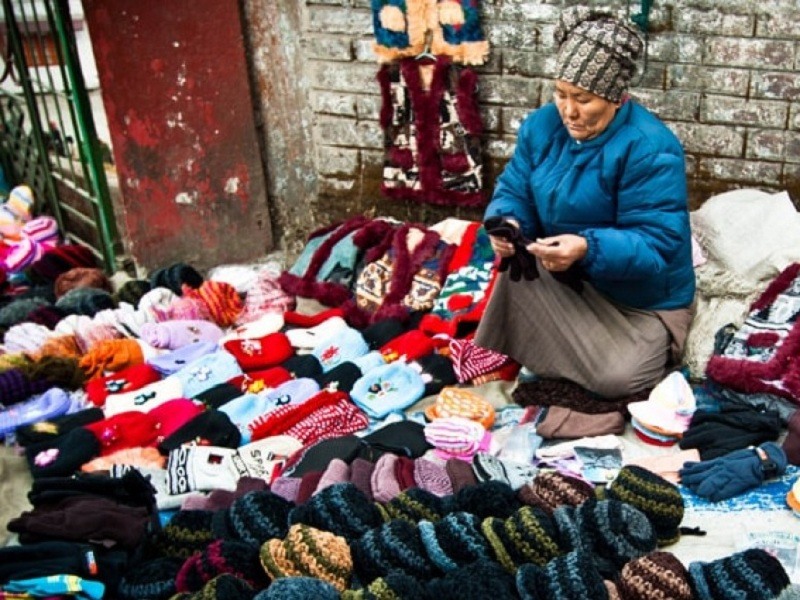
Beyond the fresh produce, Pashupati Market is a treasure trove of handicrafts and local goods. Shoppers can find woollens, handwoven scarves, traditional hats, and handmade souvenirs that reflect the craftsmanship of the region. It’s an ideal place to pick up a unique gift or memento while supporting local artisans.

You can also enjoy freshly made snacks like momo, sel roti, or fried pakoras

Read about the journey from Darjeeling to Mirik: https://tourgenie.com/blog/leisure/a-surreal-journey-from-darjeeling-to-mirik

Winter in Darjeeling – A Snow-Kissed Escape in the Himalayas

When the chill of winter sweeps through the Himalayas, Darjeeling transforms into a picture-perfect wonderland. Nestled at an altitude of 6,700 feet, this charming hill station in West Bengal offers a completely different experience during the winter months (November to February) — one that is serene, magical, and refreshingly peaceful.

Unlike the busy summer season, winter in Darjeeling is calm and uncrowded, making it the best time for travelers seeking tranquility and crisp mountain air. The town’s famous colonial charm, winding lanes, and heritage buildings look even more enchanting under the soft winter sun or a light dusting of snow.

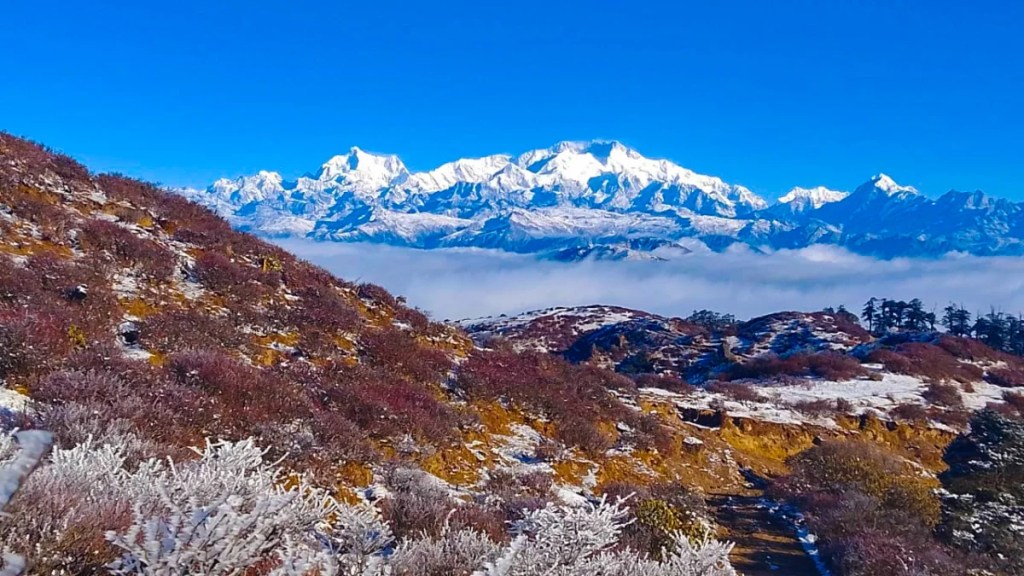
One of the biggest highlights of winter here is the breathtaking view of the Khangchendzonga range. The skies remain crystal clear, and early mornings often reward you with golden-hued sunrises from Tiger Hill, one of Darjeeling’s most iconic viewpoints. The sight of the sun illuminating the snow-covered peaks is nothing short of unforgettable.

For adventure seekers, winter adds an extra thrill. Treks like Sandakphu or Tonglu offer panoramic Himalayan views and the chance to walk amidst frost-covered trails. Meanwhile, the Darjeeling Himalayan Railway, fondly called the Toy Train, continues its scenic journey through misty hills and quiet villages, offering a nostalgic ride through winter’s calm beauty.

Warm up with a cup of freshly brewed Darjeeling tea straight from the nearby estates, or cozy up by the fireplace in one of the town’s heritage hotels and homestays. The local winter cuisine — from momo and thukpa to butter tea — adds to the charm of the season.

While temperatures can drop to 2–5°C, the experience is worth every layer of wool. Winter in Darjeeling is about slow mornings, golden sunsets, and a peaceful escape into the heart of the Himalayas — the kind of beauty that lingers long after the snow melts.

Explore Darjeeling during other seasons: https://tourgenie.com/blog/leisure/best-time-to-visit-darjeeling

Zuluk – The Winding Gateway to Eastern Sikkim’s Hidden Beauty

Perched at an altitude of around 10,000 feet in East Sikkim, Zuluk is a small yet fascinating mountain village that has steadily emerged as one of the region’s most offbeat travel destinations. Once a transit point on the ancient Silk Route that connected Tibet and India, Zuluk today offers travelers a rare mix of history, natural beauty, and adventure.

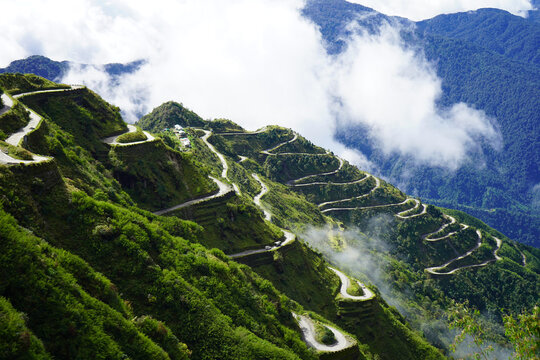
What makes Zuluk truly unforgettable is its famous zigzag road — a breathtaking stretch of over 30 hairpin bends that wind dramatically up the mountains. This serpentine road not only challenges the adventurous spirit but also rewards visitors with mesmerizing views of the Eastern Himalayas. On a clear morning, one can even witness the majestic Khangchendzonga range glowing golden under the rising sun.

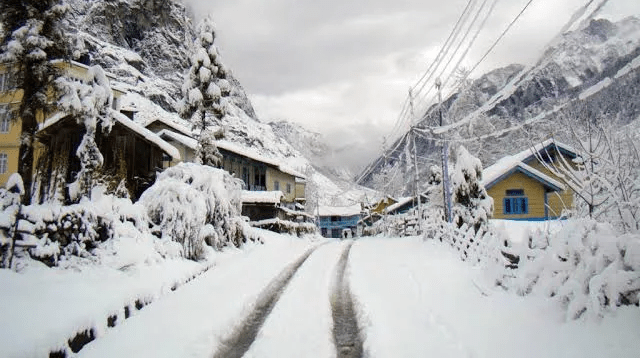
Zuluk’s landscape changes dramatically with the seasons. During summer (April to June), the slopes are covered with blooming wildflowers, turning the region into a painter’s dream. Autumn brings crystal-clear skies and postcard-perfect views, while winter (December to February) drapes the entire valley in snow, creating a quiet, ethereal charm.

Beyond its scenic roads, Zuluk is surrounded by several points of interest. The Thambi Viewpoint offers a panoramic look at the winding loops below and the snow-capped peaks beyond. It’s one of the popular places to visit during winter to catch snowfall. The Kupup Lake (Elephant Lake) and Menmecho Lake nearby are serene glacial lakes worth visiting. The region is also rich in birdlife, making it a hidden gem for nature lovers and photographers.

Due to its proximity to the Indo-China border, visitors need a special permit to visit Zuluk, usually arranged through local tour operators.

For travelers seeking solitude, starry skies, and a touch of adventure, Zuluk is a destination that perfectly balances thrill and tranquility. It’s not just a place to visit — it’s a journey through history, nature, and the heart of Sikkim’s unspoiled beauty.

Interested in exploring snowfall destinations in Sikkim this winter? https://tourgenie.com/blog/leisure/all-that-glitters-is-snow-snowfall-destinations-in-sikkim

Tsomgo Lake – Sikkim’s Enchanting Glacial Gem

High up in the Eastern Himalayas, surrounded by rugged mountains and shifting mists, lies one of Sikkim’s most mesmerizing natural wonders — Tsomgo Lake, also known as Changu Lake. Located about 38 km from Gangtok, this glacial lake sits at an altitude of 12,400 feet, making it one of the most scenic and accessible high-altitude lakes in India.

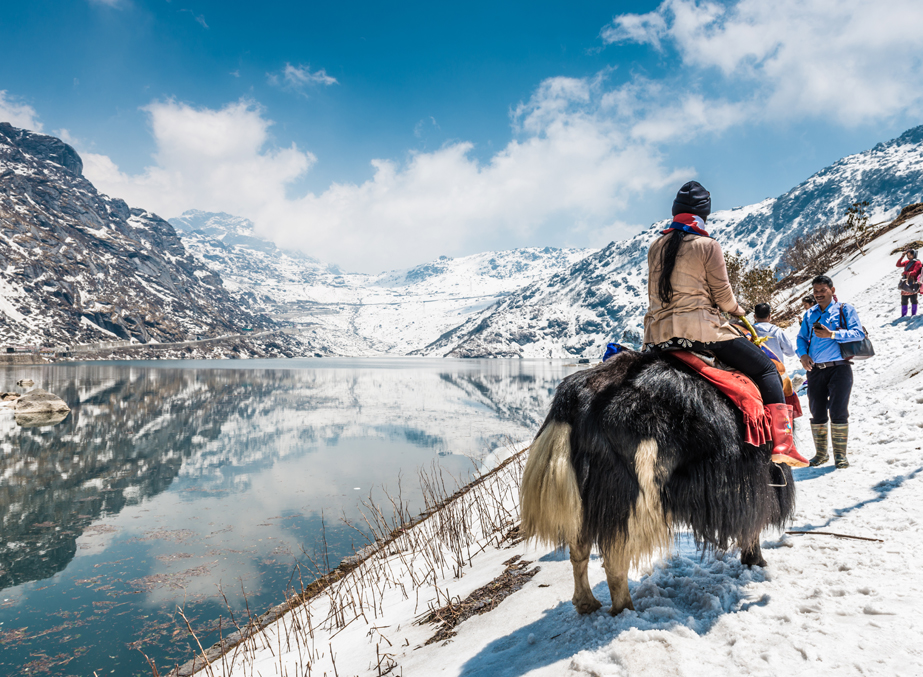
What makes Tsomgo Lake truly special is how it transforms with the seasons. During winter, it freezes into a sheet of sparkling ice, reflecting snow-clad peaks under the crisp blue sky — a sight that feels almost ethereal. By spring and summer, the ice melts to reveal crystal-clear waters that mirror the surrounding mountains, while wildflowers like rhododendrons and primulas bloom in vibrant colors around its banks. The changing hues of the lake — from deep sapphire to turquoise — add to its mystical charm.

In Sikkimese culture, Tsomgo Lake holds deep spiritual significance. The name ‘Tsomgo’ translates to “source of the lake” in the Bhutia language, and locals believe it to be sacred. According to legend, Buddhist monks once studied the lake’s changing colors to predict the future. Even today, it remains a site of reverence, where rituals are performed during the Guru Purnima festival.

Visitors can enjoy more than just breathtaking views here. The area offers yak rides along the lake’s edge — a must-try experience, especially for first-time travelers to Sikkim. Adventurers can trek to nearby viewpoints for panoramic vistas, while photographers will find endless inspiration in the reflections and mountain landscapes.

During winter, Tsomgo Lake becomes one of the most magical places in Sikkim, especially for those seeking snow experiences close to Gangtok. The journey to the lake, along winding roads fringed by snow and pine forests, is as captivating as the destination itself.

To visit Tsomgo Lake, travelers require a special permit, as it lies close to the Indo-China border. The best time to visit is from October to April for snowy views or May to June to see the lake in its full, thawed beauty.

Whether you seek tranquility, adventure, or a glimpse of nature’s artistry, Tsomgo Lake promises an unforgettable experience — a serene reflection of Sikkim’s timeless Himalayan magic.

Discover more such fascinating places in Sikkim: https://tourgenie.com/blog/leisure/10-places-you-absolutely-must-visit-in-sikkim