Airport in Mizoram

Mizoram is one of the 8 northeastern states of India. It is bounded by Myanmar to the east and south, Bangladesh to the west, Assam to the north, and Tripura and Manipur to the northeast. The hills of Mizoram form a part of the Rakhine (Arakan) Mountains, a series of compact parallel ridges with a north-south axis formed of sandstone, limestone, and shales.

One way to reach Mizoram is by air. Mizoram’s only domestic airport, Lengpui Airport, is located in Aizawl, the capital of Mizoram. The state does not have an international airport. Lengpui Airport is the first large airport in the country to be built by the State Government. Lengpui Airport is located on a plateau and has a 2,500-metre long table top runway, making it one of the trickiest runways to land on.  A tabletop runway is a runway that is located on the top of a plateau or hill with one or both ends stopping abruptly and dropping into a deep gorge. This type of runway creates an optical illusion, which requires a very accurate approach by the pilot. Hence, pilots flying aircrafts to Mizoram need to be cleared as per DGCA regulations to operate in airports situated in hilly terrains. The Lengpui Airport was completed in a record time of 2 years, 2 months. It was constructed at a cost of Rs. 979 million. The construction work of the airport started in December 1995 and completed in February 1998.

Lengpui Airport has connecting flights to Netaji Subhash Chandra Bose International Airport, Kolkata; Borjhar Airport, Guwahati; and Bir Tikendrajit International Airport, Imphal. The airlines operating from this airport are the Air India airline and the Go Air airline. Reaching to one of the least explored and visited places in Northeast India had never been this easy. You can visit this beautiful state in India from anywhere in the world maybe by direct flight or connecting flights.

Read full article at: https://tourgenie.com/travel-diaries/travel-blogs/airport-in-mizoram
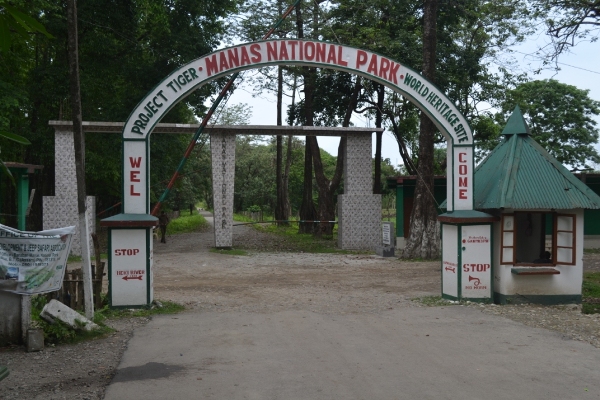
Explore National Parks in Assam

Situated at the foothills of the mighty Eastern Himalayas, Manas National Park is a densely forested area at an average elevation of 85m above sea-level. Sprawling over an area of 2837 sq. km, it offers unique biodiversity and landscape. It acquired the status of a Biosphere Reserve in 1989 and was declared a World Heritage Site by UNESCO in December 1985.

Manas National Park is flooded by tourists from all over the world who visit to catch glimpses of many wildlife species such as the Golden Langur, Pygmy Hog, Hispid Hare, Assam Roofed Turtle, Wild Water Buffaloes, etc. If you are planning to visit Assam, you must include the Manas National Park in your itinerary. The National Park area is located between two districts of Assam– Chirang and Baksa and is divided into three ranges. This utopian destination, where you can find the harmonious co-existence of several diverse wildlife species, is accessible via various modes of transport. Manas National Park tourism offers a wide range of activities for tourists to enjoy. You can have a relaxing vacation as well as some adventurous experiences to be ticked off your bucket list amidst the bounty of nature. Indulge yourself in rare visual treats and activities at Manas National Park like jeep safari, elephant safari, river rafting.  If you are a wildlife enthusiast who also likes to have an adrenaline rush once in a while, these safaris and river rafting on the Manas River will surely take you by delight! You can also visit villages and tea plantation areas and go for bird watching. A region enriched with flora and fauna, it will prove to be a paradise of sorts for bird-lovers particularly, since every direction resonates with their coos. The Manas National Park is one of best places to visit in Assam and gather memorable experience to take home. So what are you waiting for? Pack your bags and head to Manas National Park today!

Read full article at: https://tourgenie.com/travel-diaries/travel-blogs/manas-national-park

Kamakhya Mandir in Guwahati

Guwahati is known for its many mandirs, and hence, it is also known as the “city of temples.” It is a popular pilgrimage site for thousands of devotees to Guwahati every year. Each mandir differs in structural beauty and history that only make them fascinating revered religious sites in Guwahati, Assam.

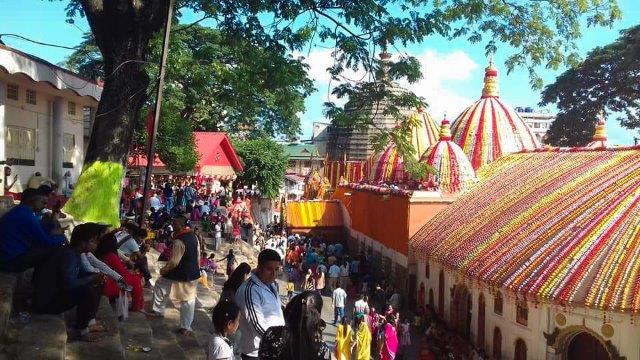
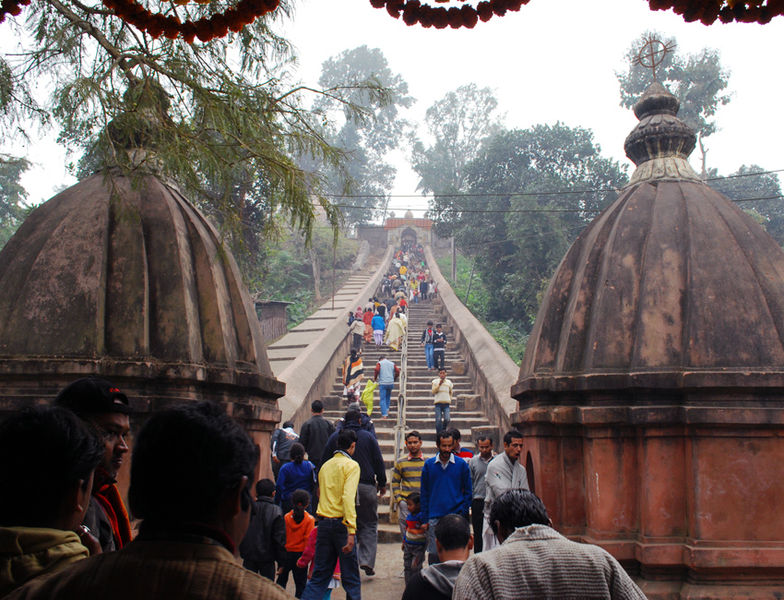
Kamakhya Mandir, situated on Nilachal Hill of Guwahati is an important Hindu temple dedicated to the mother goddess Kamakhya. It is the main mandir among a complex of individual mandirs dedicated to the ten Mahavidyas. It is an important pilgrimage destination for Hindus, especially for Tantric worshipers. The structure of Kamakhya Mandir is a hemispherical dome on top of a cruciform base with 4 chambers.

 The Kamakhya mandir in Guwahati has an interesting history. Assumptions are made that it was destroyed by Kalapahar, however the latest historical findings points out an earlier destruction of Kamakhya Mandir during Hussein Shah’s invasion of the Kamata kingdom then under Nilambar. The ruins of mandir was generally said to have been discovered by Vishwasingha, who revived worship at the site, but it was during the reign of his son Naranarayan that the reconstruction of Kamakhya Mandir in Guwahati finally reached completion.

In the reconstruction of Kamakhya Mandir, the materials used were from original mandirs that was lying scattered about. Banerji records that the structure of Kamakhya Mandir was further built over by the rulers of the Ahom kingdom. A devout Hindu, Rudra Singha as he grew older he decided to formally embrace the religion and become an orthodox Hindu. But he could not bear the thought of humbling himself in front of a Brahmin who was his subject. So he sent envoys to Bengal and summoned Krishnaram Bhattacharyya, a famous mahant of Shakta sect. Legend suggests that the mahant was unwilling to come but consented on being promised to be given the care of Kamakhya Mandi to him. Though the king did not take sharan, he satisfied the mahant by ordering his sons and the Brahmins to accept him as their spiritual guru. When Rudra Singha died, his eldest son Siba Singha became the king and handed over the management of mandir along with large areas of land to Mahant Krishnaram Bhattacharyya.

Read full article at: https://tourgenie.com/travel-diaries/travel-blogs/kamakhya-mandir-in-guwahati

Places to visit in Guwahati

A cosmopolitan outlook, ponds, palm trees and single-storey traditional houses are the first few visuals you come across when in Guwahati. It seems like the elders in the society can never be wrong. They once named Guwhati Pragyotishpur (Light of the East), and we believe that Guwahati has lived up to this title. This is the largest city in the northeast and blends in the old colonial charm with concrete structures.

Guwahati is well known for religious places like Kamakhya Temple located on the Nilachal Hill. It is over 2200 years old and according to the locals, the goddess menstruates once every year at this temple. Umanada Temple situated on Peacock Island in the middle of the Brahmaputra River is also a famous religious place in Guwahati. This quiet place of worship is named after and dedicated to Lord Shiva. The name ‘Umananda’ comes from the two Hindi words ‘uma’ – Lord Shiva’s wife and ‘ananda’ meaning happiness. The Umananda temple is nestled in the laps of this serene island whose shores are washed by the mighty Brahmaputras.  Apart from temples in Guwahati, tourists also love visiting the Assam State Museum, previously Assam Provincial Museum located in the southern end of Dighalipukhuri tank or the heart of Guwahati city, Assam. The Museum was established by the Kamarupa Anusandhan Samiti in 1940. The Guwahati Planetarium is also one of the places of attractions in Guwahati. It is one of its kind center of astronomical education and research in Assam and the entire North-Eastern region of India. The Guwahati Planetarium is unrivaled in Assam and rest of northeast India with its distinctive dome and sloping walls that sets it apart in the skyline of the area. Another famous place to visit in Guwahati is Dighalipukhuri. It is a rectangular man-made pond that is about half a mile long. Dighalipukhuri is occupied altogether area of garden and pond between 17-18 bigha lands.

Spend your vacation in the wilderness just at the banks of Brahmaputra River. We are sure this place will create a beautiful memory to last a lifetime.

Read full article at: https://www.tourgenie.com/discover/discover-assam/guwahati-sightseeing

Explore Guwahati to Shillong

From the land of the one-horned rhinoceros to the home of clouds and rain, a journey to Assam and Meghalaya is always refreshing. While Assam boasts of tea gardens, the mighty Brahmaputra, the Kaziranga National Park and a host of temples, Meghalaya is home to rolling highlands, innumerable waterfalls, caves and even the cleanest village in India.

A trip to these two fascinating states starts at Guwahati, which is a base for entering any of the other 6 north-eastern states in India. In the heart of Assam, close to Guwahati, lies the Kaziranga National Park, a world heritage site as declared by UNESCO. You can reach Guwahati and take a 5-hour drive down to this National Park. As safaris only take place in the mornings, you can relax and absorb the surroundings as you prepare for an exciting day. The next day, you can take a jeep-safari or even an Elephant ride, which is controlled by the Forest Department of the Govt. of Assam, into the sanctuary and experience the exotic wildlife this place has to offer. The rest of the day can be enjoyed by visiting a tea garden and local communities in villages nearby.

The next day, drive down to Shillong, the charming hill-station capital of Meghalaya and fondly called the ‘Scotland of the East’. Indulge in good old-fashioned sightseeing in and around Shillong which offers museums, waterfalls, lake, and picturesque view points. After a day at Shillong, move towards Cherrapunjee, which was at one time, the wettest place on earth. Explore the Living Root Bridge and a short trek which will be around 3.5 km from the resort you can put up at. The next day is for an excursion to Mwallynong which is a 3 hrs drive from Cherrapunjee. It is dubbed the cleanest village in India by Discover India Magazine. Have an insight into Khasi culture and way of life here and return back to Shillong.

For your final stop, you will head back to Guwahati because the next day, you will be visiting the famous Kamakhya Mandir on the Nilachal hill. You can also visit the Sankardev Kalakshetra, a cultural institution in the Panjabari area of Guwahati  or take a cruise down the Brahamputra river before you bid adieu this fascinating land. Don’t forget to indulge in some shopping at Paan bazaar to pick up curios and souvenirs.  

Plan your dream visit to Guwahati and Shillong at: https://www.tourgenie.com/assam-tour-packages/explore-guwahati-to-shillong

Understanding the Weather and Temperature in Guwahati

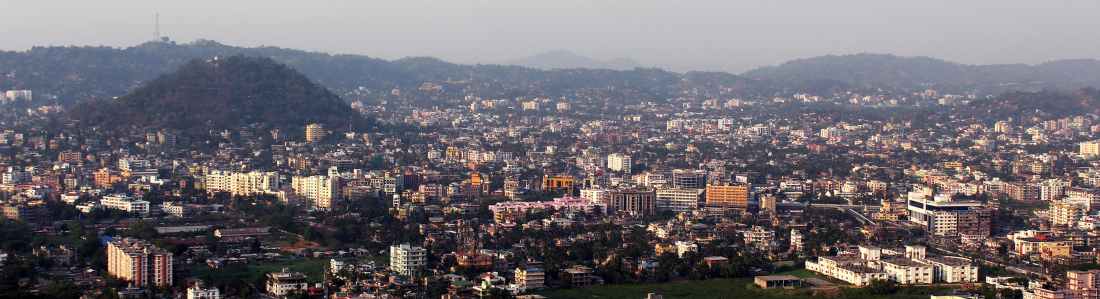
Guwahati is the largest city in Assam and in the whole of North-east India. Its name is derived from ‘Guwa’ which means areca nut and ‘haat’ which means a ‘bazaar’ or market. Situated on the Brahmaputra River, Guwahati is a port city and one of the fastest-growing cities in the country. Even historically, Guwahati has been a bustling trading center. Assam is also equally famous for being the ‘Corridor to the North East’ and rightly so said because you can practically go to any of the other six of the ‘seven sisters’ states of India by road with Guwahati as its base. It even shares its border with the countries of Bhutan, Myanmar, and Bangladesh

It is also famous as a pilgrimage site, being home to famous temples like the Kamakhya, Navagraha, and Umananda (which also happens to be the largest river island in the world) to name a few. No wonder it receives thousands of visitors every year, especially during Hindu festivals. When taking of tourist attractions, how can one leave out the UNESCO listed Kaziranga National Park which is home to the one-horned rhinoceros and many other exotic wildlife. Not to forget amazing sunsets over the Brahmaputra, that can be viewed in all its glory on a lazy river cruise.

Geographically, Guwahati is in the foothills of the Shillong plateau and is divided into two valleys by the Brahmaputra and the Barak rivers.  It, therefore, has a sub-tropical climate and experiences a semi-dry summer (peak time: April and May) with a maximum temperature of about 36⁰C on an average during this time. Monsoons come in from June and last mostly till September with an annual rainfall which ranges between 1500- 2500 mm and an average humidity around the year of 75%. Winters start from November and last till the end of February.  The minimum temperature stays around 10⁰C, which means the temperature makes this time quite pleasant to move around. This is the perfect time to visit Guwahati and see its diverse attractions and maybe travel to Shillong or Tawang or even to Myanmar or Bhutan from there.

You can also see this article at: https://www.tourgenie.com/travel-diaries/travel-blogs/temperature-in-guwahati

Geography of Assam

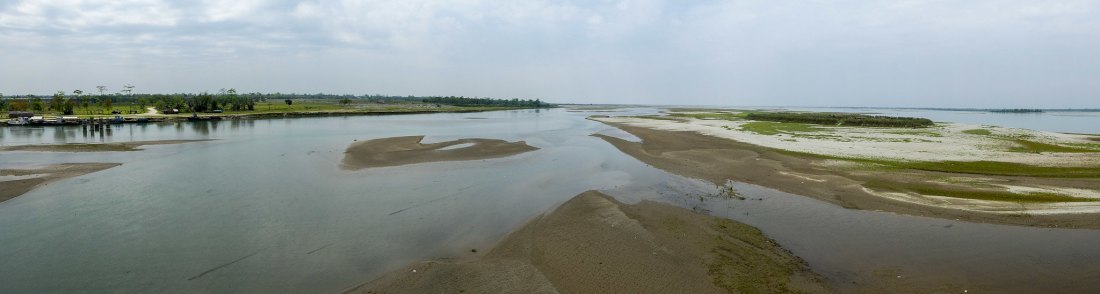
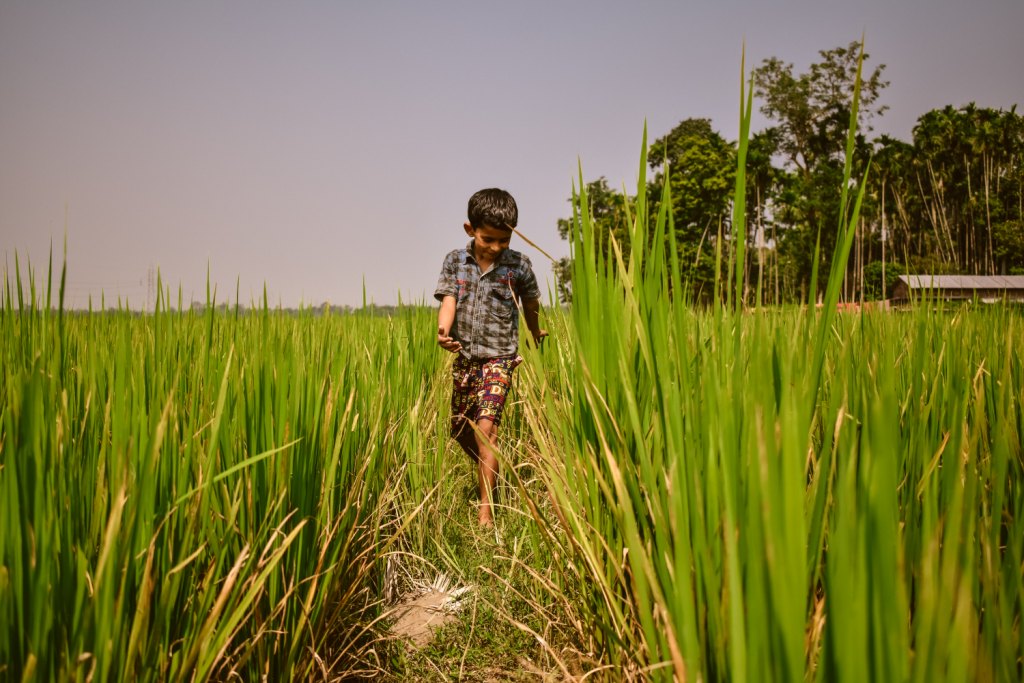
Assam is one of the 8 states of Northeast India. An important geographical aspect of Assam is that it contains 3 of 6 physiographic divisions of India – the Northern Himalayas (Eastern Hills), the Northern Plains (Brahmaputra plain), and the Deccan Plateau (Karbi Anglong). As the Brahmaputra flows in Assam, the climate here is mostly cold, and it receives a lot of rainfall. Geomorphic studies conclude that the Brahmaputra, the life-line of Assam, is an antecedent river fairly older than the Himalayas.

With the tropical monsoon climate, the temperature in Guwahati, the capital city of Assam during summer ranges from 950 – 100°F or 350 – 38°C, and during winter the temperature ranges from 430 – 46°F or 60 – 8°C. The climate and temperature is characterized by particularly heavy monsoon downpours, reducing summer temperatures and affecting foggy nights and mornings in winters, generally frequent during the afternoons. Spring (March-April) and autumn (September-October) are usually pleasant with really moderate rainfall and temperature. Assam is one of the richest biodiversity zones in the world with grasslands, forests, tropical rainforests, bamboo orchards and multiple wetland ecosystems. Many of these are protected and reserved areas. Assam is also rich in orchid species. The recently set up Kaziranga Orchid and Biodiversity Park has more than 500 of the estimated 1314 orchid species found in India. This state is also a refuge for endangered and threatened species including the Bengal tiger, pygmy hog, white-rumped vulture, golden languor, brahminy river turtle, Asian forest tortoise, Assam roofed turtle among many others.

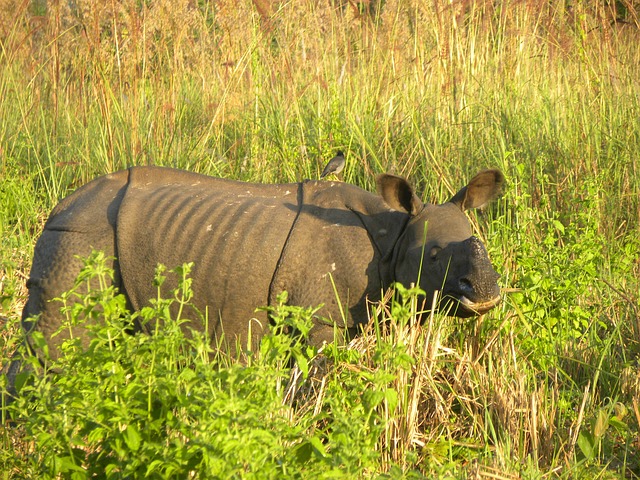
Assam’s two wildlife sanctuaries—Kaziranga National Park and Manas Wildlife Sanctuary—are UNESCO World Heritage Sites, with Kaziranga National Park providing the only refuge for the fast-disappearing Indian one-horned rhinoceros. This beautiful state in Northeast also has coal, natural gas, limestone, petroleum and other minerals like clay, feldspar, and magnetic quartzite.

Read full article at: https://www.tourgenie.com/travel-diaries/travel-blogs/geography-of-assam

National Parks in Assam: Manas National Park

Situated at the foothills of the mighty Eastern Himalayas, Manas National Park is a densely forested area at an average elevation of 85m above sea-level. It got its name from the Manas River, which, in turn, is a great tributary of the river Brahmaputra that passes through the park. It is interesting to note that in 1992, UNESCO had declared this national park as a world heritage site in danger, owing to heavy poaching and terrorist activities. Manas National Park is flooded by tourists from all over the world who visit to catch glimpses of many wildlife species such as the Golden Langur, Pygmy Hog, Hispid Hare, Assam Roofed Turtle, Wild Water Buffaloes, etc.

If you are planning to visit Assam, you must include the Manas National Park in your itinerary. The Manas National Park area is located between two districts of Assam- Chirang and Baksa. The nearest airport to Manas National Park is Guwahati, which is around 5 hours drive away. Bansbari is the entry point to Manas National Park where Musa Jungle Retreat is located. Hotels are quite scarce in Manas National Park but one can find a host of comfortable lodges offering decent accommodation and they arrange safaris too.

Manas National Park tourism offers a wide range of activities for tourists to enjoy. Jeep Safari: Being home to over 20 endangered species of birds and animals, Manas National Park promises sightings of exotic wildlife and an excellent Elephant safari. Being home to local Bodo villages, the sanctuary has several small indigenous communities of Ghatigaon and Ragu Bil living peacefully together. The best time to visit the Manas National Park is between November and April. Note that Manas National Park is partially open in the months of May and October. On the other hand, Manas National Park remains closed from June to September due to monsoons. 

Pack your bags and head to Manas National Park today!

Read full article at: https://www.tourgenie.com/travel-diaries/travel-blogs/national-parks-in-assam-manas-national-park

Kaziranga National Park

No trip to Assam is complete without visiting the iconic Kaziranga National Park. It is located amidst two districts of the state, Nagaon, and Golaghat. Not just rhinos and tigers, the majestic Kaziranga National Park also shelters huge numbers of elephants, buffalos, swamp deer, and other animals. Tropical broadleaf forest, tall elephant grass, and marshland form an excellent biosphere for the wildlife here. The airport nearest to Kaziranga National Park, Assam, is Jorhat (Rowirah) Airport, which is located 96 kilometers away. Other major railway stations with proximity to Kaziranga National Park are Furkating Junction and the Guwahati railway station. Kaziranga has numerous government and private lodges, hotels, as well as luxury hotels close to Kaziranga National Park that promise a comfortable stay for all visitors.

Kaziranga in Assam receives a lot of rainfall, which sometimes leads to flooding in Kaziranga National Park. Hence, Kaziranga National Park remains closed for visitors from May to October. The best time to visit Kaziranga National Park in Assam is between November and April.

The best way to experience the wilderness here, is through an elephant safari or jeep safari provided by the park itself. The forest department of the Government of Assam also arranges jeep safaris for the tourists inside Kaziranga National Park. Unlike elephant safari, jeep safari covers a larger area of Kaziranga National Park.  The primary visitor activities here, are observing wildlife and birding. Safaris allow photography inside Kaziranga National Park. Numerous ponds are spread across Kaziranga National Park adding to its beauty. Additionally, the forest department has set up an interpretation center at Bagori, Kaziranga, to let visitors learn more about Kaziranga National Park, Assam. The Kaziranga National Orchid and Biodiversity Park is a recent set up at Durgapur village located in Chirang district in Assam. It has become one of the latest attractions to tourists visiting Kaziranga National Park, Assam.

General guidelines when visiting Kaziranga National Park, Assam

  1. Maintain silence
  2. Do not try to agitate animals 
  3. Do not leave litter behind 
  4. Do not get out of the vehicle except at designated areas 
  5. Do not leave the designated trails
  6. Avoid wearing bright colored clothing

Read full article at: https://www.tourgenie.com/travel-diaries/travel-blogs/kaziranga-national-park

Food in Assam: A beginner’s guide

Food and gastronomy is the quickest and tastiest way to get to know a place or a culture. Assam is no different. Home to different tribes and indo-mangol- burmese mix of immigrants, it boasts of a varied feast for the tongue. Here are some of the popular culinary delights of Assam that you should definitely try:

Khar is one such food that may sound bizarre when you hear the ingredients; raw papaya, pulses, cassava, and meat? Well it is an interesting combination that works so well you won’t be complaining. It is one of the must have dishes of Assam. Another unique dish to try in Assam is the Bangajor Lagot Kukura made with chicken on the bone and cooked in lentils. A delicacy that has an acquired flavor imparted by the pungent bamboo shoots. If you are a fish lover, you must try the delicious Masor Tenga stew. Prepared with sweet river fish simmered in a refreshing sauce base of tomatoes and made tangy by the addition of lime, it is a feast in the mouth. Game birds like duck and pigeon are commonly eaten in Assam and if you have bold appetite, Paro Manxho is the dish for you. It is sort of comfort food of winters prepared with pigeon or quail meat and cooked with banana flowers.

The staple food of Assam is rice and all these lovely dishes are eaten with rice. One of the popular rice dishes is the Poitabhat; the fermented cooked rice spiced and served with side dishes. While ordering traditional thali style food in restaurants, it is common that you might be served Xaak Aru Bhaji, a side dish made with seasonal leaves. Ou Khatta is traditional Assamese chutney of sour fruit called Ou that goes well with sweet curd and papads. From the unique to the bizarre, Polu or silkworm larvae is a tribal delicacy and available only in certain parts of Assam.

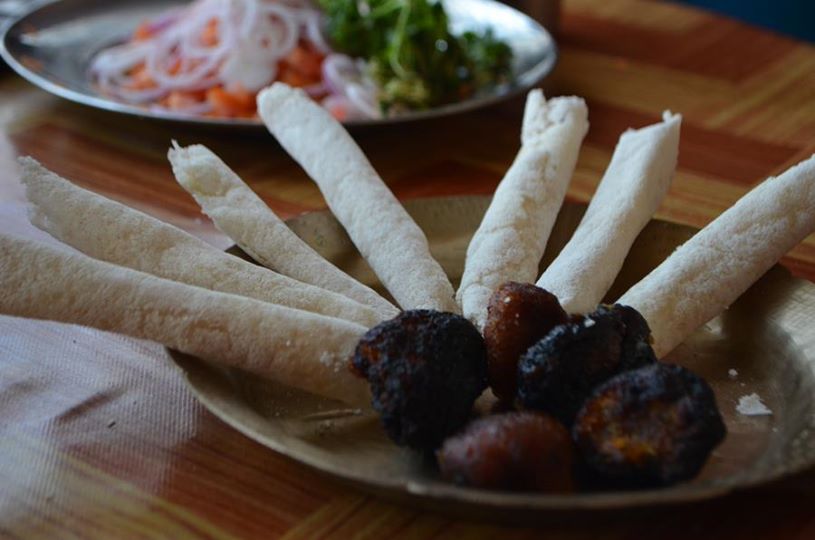
 Assam has a huge array of sweets to choose from and pithas are one of them. Even if you are not meat eater, you will still find a lot of choices to choose from to feast in Assam. Try the mouth watering food of Assam and find yourself craving for more.

Read full article at: https://www.tourgenie.com/travel-diaries/travel-blogs/food-in-assam-a-beginners-guide