Kamakhya Mandir, one of the most revered Hindu shrines in India, is located atop the Nilachal Hill in Guwahati, Assam. Dedicated to the goddess Kamakhya, an incarnation of Shakti, this ancient temple is not only a significant pilgrimage destination but also a center of Tantric worship. It holds immense religious, cultural, and historical importance, attracting devotees and scholars from across the country and beyond.
Historical Significance
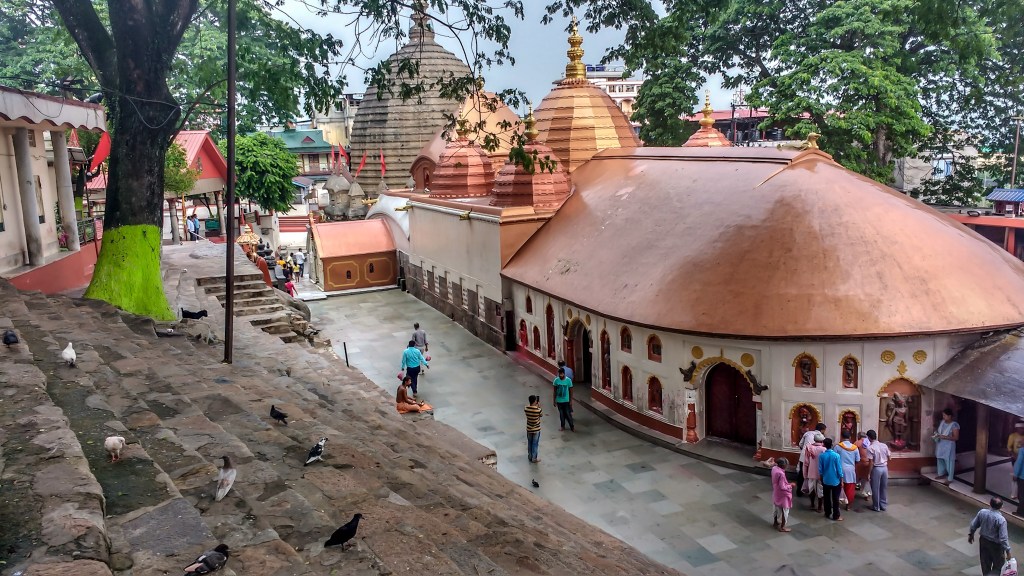
The Kamakhya temple is believed to have been built in the 8th-9th century by the Mlechchha dynasty and later rebuilt by the Koch king Naranarayan in the 16th century after it was destroyed. Over time, it has been renovated and maintained by various rulers and devotees. The current structure showcases a blend of Hindu and local Assamese architectural styles, most notably the beehive-shaped shikhara (tower) and intricately carved sculptures of Hindu deities.
Kamakhya is regarded as one of the 51 Shakti Peethas—sacred places associated with the body parts of Goddess Sati. According to legend, when Sati immolated herself in protest against her father Daksha’s insults towards Lord Shiva, a grief-stricken Shiva carried her corpse across the universe. Lord Vishnu used his Sudarshana Chakra to cut her body into pieces to relieve Shiva of his sorrow. These parts fell at various locations, and the Kamakhya temple is believed to mark the spot where her yoni (womb and genitalia) fell. Hence, it is a powerful symbol of feminine energy and fertility.
Religious and Spiritual Importance
The temple is unique in that it does not house a statue or idol of the goddess. Instead, the object of worship is a stone yoni-shaped structure that is kept moist by an underground spring. This symbolizes the creative power of the goddess. Tantric practices are prevalent here, and Kamakhya is considered a hub of Tantric Shaktism. The temple is open to both traditional and Tantric worshippers, making it an inclusive spiritual destination.
One of the most significant festivals held here is the Ambubachi Mela, which takes place in June. It celebrates the annual menstruation cycle of the goddess Kamakhya, symbolizing fertility and the creative power of nature. During the three-day period, the temple remains closed, and pilgrims throng to Guwahati to receive blessings when it reopens.
Architecture and Surroundings
The Kamakhya temple complex includes ten other temples dedicated to different Mahavidyas (aspects of the goddess), such as Kali, Tara, and Bhairavi. The main temple is made of stone and brick, with a distinctive dome and a series of curved roofs typical of Assamese architecture. The entrance and inner sanctum are adorned with images of various deities, mythological scenes, and floral motifs.
From the temple, one can enjoy a panoramic view of Guwahati city and the mighty Brahmaputra River. The serene atmosphere and spiritual aura of the place make it an ideal destination for those seeking peace and enlightenment.
Conclusion
Kamakhya Mandir is more than a temple; it is a symbol of divine feminine energy, spiritual wisdom, and cultural richness. Whether you are a devotee, a traveler, or a student of history and religion, a visit to this sacred hilltop shrine in Assam offers a unique and profound experience that lingers long after the journey ends.
Click the link to explore various places to visit in Assam:
https://www.tourgenie.com/blog/leisure/10-best-places-to-visit-in-guwahati

 TourGenie Simplify Travel