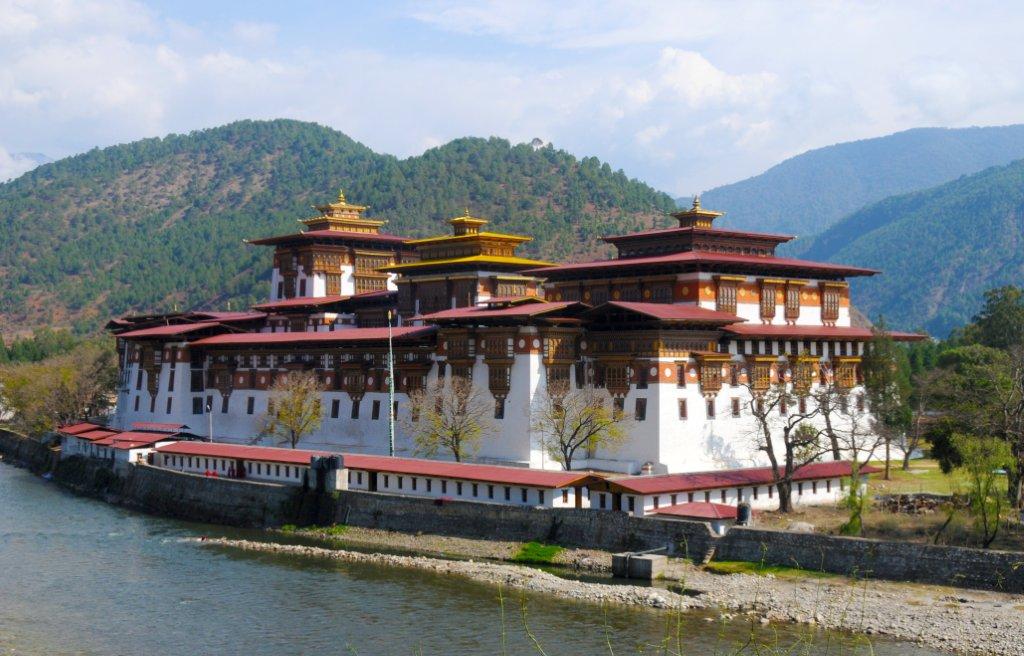
Holiday Packages To Bhutan

Nestled in the eastern Himalayas, the tiny Buddhist Kingdom of Bhutan was inaccessible to the outside world until a few years ago, and now it has become one of the premier travel destinations in this part of the world primarily because of its unique culture and traditions that have been preserved for centuries now. Bhutan is also nicknamed as ‘the Land of the Thunder Dragon’ and is the only country to go by the philosophy of Gross National Happiness as a development index. Bhutan lies in Southeast Asia and shares its border with Tibet, Sikkim, Arunachal Pradesh, Assam, and West Bengal. Bhutan has only one international airport— Paro Airport. The nearest railway station is Hasimara in West Bengal. Bhutan is well connected by roads too (Phuentsholing, Samdrup Jongkhar) and accessible from India.

The landscape of Bhutan consists mostly of steep and high mountains and deep valleys. , Bhutan’s climate goes from subtropical in the south to temperate in the highlands, while in north Bhutan the region experiences an extremely cold climate with year-round snow. No wonder Bhutan is rich in flora and fauna. You will also find delicious foods here from soups and stews of meat and dried vegetables spiced with chilies and cheese are popular preparations. Buckwheat, rice, and maize are staples here. Food will never be a problem here.Dzongkha is the official and national language of the Kingdom of Bhutan. Having said this, most of the people in Bhutan speak English and Nepali and even understand and speak Hindi. The national dress for Bhutanese men is the gho and women wear an ankle-length dress called the kira. The best time to visit Bhutan is in the spring/summer months between March and May. October and November are great for hiking and trekking.

Bhutan has a lot of exciting holiday options. Here are a few curated by TourGenie:

Festival holiday packages: Festivals are the best time to visit Bhutan to understand their culture and religion like the Lhuentshe Tshechu Festival

Motorcycle tour holiday packages: Nothing beats a tour on bike to appreciate the beauty of this country. Popular routes takeyou through the main cities of Paro, Thimphu, Punakha, and Bumthang.

Mountain biking holiday packages: Have an adventurous heart and love mountain biking? Then this is a once in a lifetime experience waiting to be explored. Explore Western Bhutan Mountain Biking Tour

Walking tour holiday packages: Walking tours are perfect to see and experience local lifestyle and way of living of those living in rural Bhutan, like the Bhutan Remote Villages Walking Tour.

Hiking and trekking holiday packages: Treks like theChelela to Kila Goenpa Nunnery Hike will take you through beautiful dense forests, with spectacular views of Paro Valley and Haa Valley of Bhutan.

Read more at: https://www.tourgenie.com/travel-diaries/travel-blogs/holiday-packages-to-bhutan
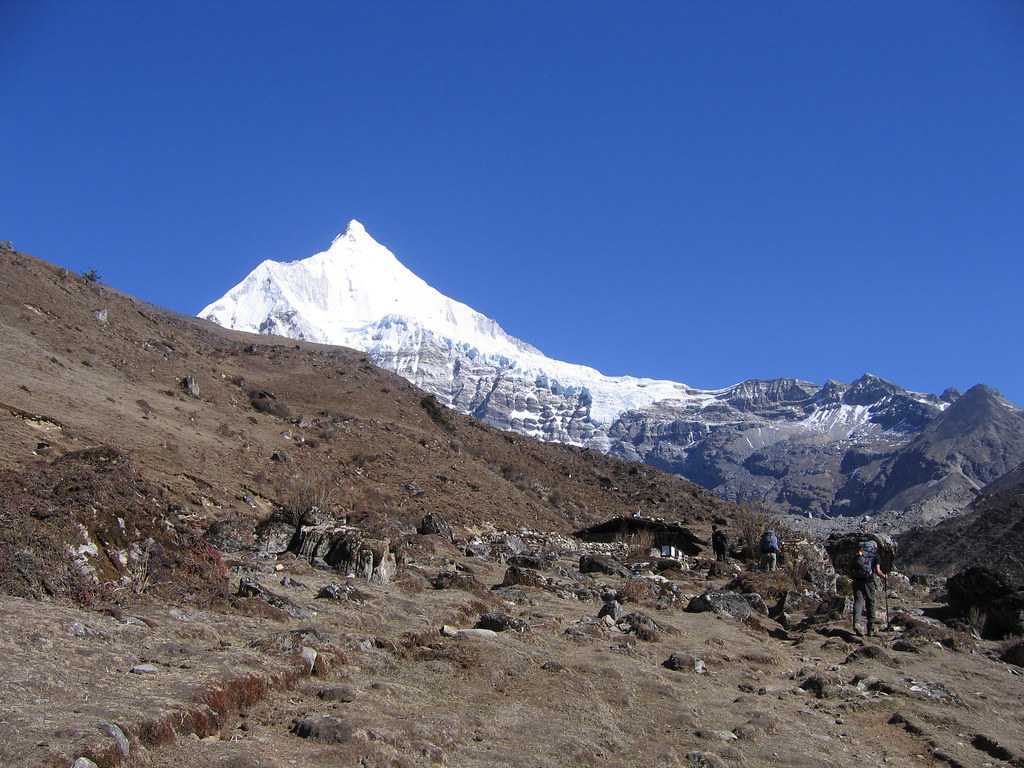
Trek In Bhutan: Jomolhari Laya Gasa Trek

One of the most scenic of treks in Bhutan is unmistakably the Jomolhari Laya Gasa Trek which is a 217 km trek, spanning over 14 days beginning at  Drukgyel in Paro valley. The trek is named after the highest peak of Bhutan Mt. Jomolhari which is also believed to be the abode of the Goddess of protection (Jomo). The trek will take you through gorgeous alpine meadows, high mountain passes, and dense subtropical jungles before ending at Damji in Tashithang. Along the trail of the Jomolhari Laya Gasa Trek, you will be able to spot indigenous animals of Bhutan such as blue sheep and takins and pass through most pristine and unspoiled landscapes in Bhutan. The trek also offers a day of relaxation at the famous Gasa hot springs en-route. The best months to visit Bhutan to complete this trek are between April-June and mid-September-mid-November, when Bhutan experiences clear skies and a pleasant climate.

Day 1 starts at the Gunitsawa Village in northern Paro and ends at Sharna Zampa (2850m). The following day you trek for almost 22km to reach the campsite at Thangthangkha (3610m). You get the first view of Mt. Jomolhari from here. On Day 3, the trail ends at Jangothang (4080m) while passing through alpine meadows and sightings of yaks. This part of the trek is especially scenic. Day 4 is a rest day for acclimatization and a chance to spot blue sheep and enjoy short hikes around the campsite. The next day, the trail begins at a rapid climb towards Nyilila Pass (4870m) after which there is a descent towards the Lingshi Basin (a U shaped valley). The day ends near the Lingshi Dzong (4010m). The half-day mark takes you to the village of Chebsia (3880m) where the day ends. From here you can also visit the stone houses in the Goyul village nearby.

The 7th Day will lead you towards Gobu La Pass (4410m) and will end above the tributary of Mo Chhu river at Shomuthang (4220m). The eighth day will take you to Jhari La (4750m) from where you can glimpse Sinche La (the pass which comes on the 9th Day), the Great Tiger Mountain, Tserim kang and the Jomolhari. The day ends at Robluthang (4160m), which is in a rocky meadow. The 9th day takes you to Sinche La (5005m), the final and the highest pass on this trek. You will then cross the Kango Chhu and then reach the Limithang campsite (4140m). The 10th day is a downhill trail along the winding river valley to the Laya village (3840m) with glorious views of Mt. Gangchhenta and Mt. Masagang. This is where you will end the day. On the 11th day, the trail takes you to the river valley of Mo Chhu, the major river in Bhutan, up to Kohi Lapcha and then down to Koina (3050) where you will camp for the night. On the 12th day, you will climb to cross the Bari la (3740m) pass to reach the campsite at the Gasa village (2240m), close to the Gasa Dzong. If you descend for another hour, you can relax in the rejuvenating mineral waters of the Gasa Tsachu, one of the most popular hot springs in Bhutan. The trek ends here and offers you a chance to explore this remote village in the northwest of Bhutan. Gasa is home to a distinctive and architecturally unique Dzong and is also an environmentally protected area of Bhutan

Every trek in Bhutan is accompanied by a guide, cook, camping assistant, and a few horsemen and horses to carry gear and the Owl Trek is no different. The maximum elevation that is reached during the trek is 5005m (16420 feet above sea level). Make sure to wear hiking boots, all-terrain clothing and carry a sleeping bag, water-bottle, first-aid kit, and a de-hydration kit as essentials.

To know more about this trek in details, read here: https://www.tourgenie.com/travel-diaries/travel-blogs/trek-in-bhutan-jomolhari-laya-gasa-trek