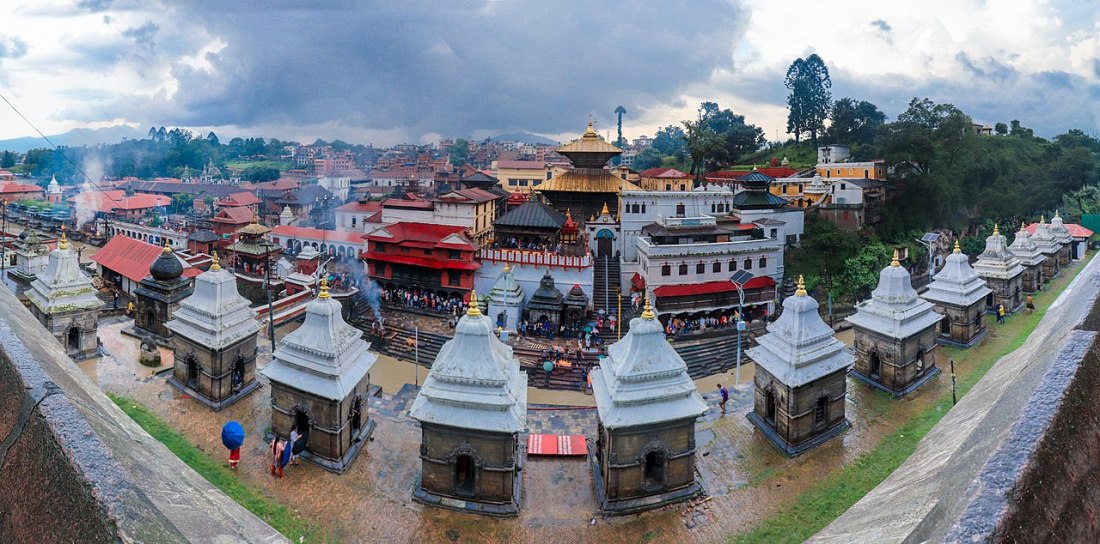
Pashupatinath Mandir in Nepal

Nepal is not just beautiful but also is enriched in cultural and religious symbols and practices and offers wide realms for spirituality too. Among the many religious sites, Pashupatinath Mandir remains the biggest holy mandir in country. One of the four major religious sites in Asia dedicated to Lord Shiva is Pashupatinath Mandir in Nepal built in the 5th century.

Though the exact history of the existence of the temple is not known but there are many legends and myths associated with the construction of the temple. The Pashupatinath Mandir complex is widely stretched on both sides of Bagmati River and the temple portrays exquisite architectural beauty built in pagoda style with gold-covered roof and silver doors. In the east of Pashupatinath Mandir lies Guheshwori Mandir, dedicated to Sati Devi, the first wife of Lord Shiva. This temple is also regarded as one of the most important mandirs in the premises of Pashupatinath, believed to be a symbol of power (shakti). Other various temples present within the premises are Bhuwaneshwori, the Dakshinamurti, Tamreshwor, Panchdewal, Bishwarupa, and others. All the mandirs have their own meaning, values, and rituals to be performed.

The Pashupatinath Mandir carries huge mythological and spiritual value for the people of Nepal residing across the world. Many believers in Nepal come to reside here during their last days of life. Legends have it that people who die in the premises of the mandir are reborn as human beings despite their misconduct in their lifetime. The premises of Pashupatinath Mandir in Nepal are used for different purposes. One can find this a perfect place for meditation; some indulge in exploring ayurvedic, some come for darshan, some are touristsand some come to meet the astrologers.  

Read more article at: https://www.tourgenie.com/travel-diaries/travel-blogs/pashupatinath-mandir-in-nepal
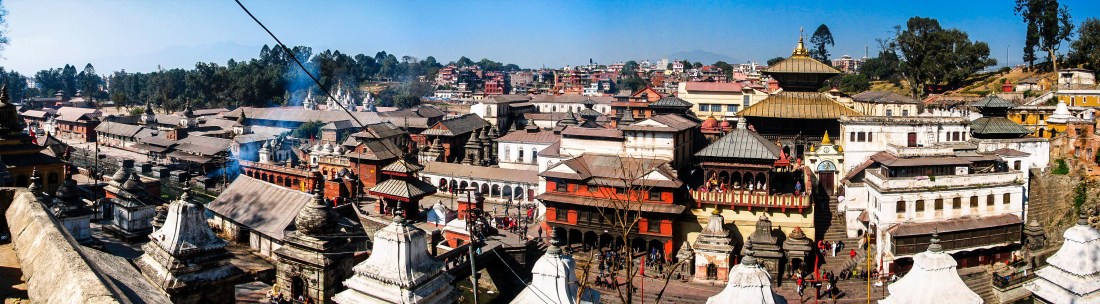
Discover Kathmandu places to visit

The capital city of Nepal, Kathmandu with a population of around 2.5 million is the first region in Nepal to face the unprecedented challenges of rapid urbanization and modernization at a metropolitan scale. Kathmandu is also known as the city of temples that stands at an elevation of approximately 1,400 meters above sea level. Kathmandu valley is also termed as the ‘Nepal Mandala’ and many holy shrines can be found in almost every corner of the city.

Kathmandu is one of the centers of Nepal’s history, art, culture, and economy beautifully settled in a bowl shaped valley and has a multi-ethnic population within a Hindu and Buddhist majority. There are many places to visit in Kathmandu that attracts tourists from all over the world. Almost all the areas of the city are crowded with travelers throughout the year. Pashupatinath Temple is a famous and sacred Hindu temple complex about 5km from Kathmandu and is one of the seven monument groups in UNESCO World Heritage Sites. One of the popular places to visit in Kathmandu is the Boudhanath Stupa, one of the largest spherical shrines in Nepal. Other places to visit in Kathmandu are the famous Thamel Bazaar the center of tourist industry in Kathmandu for over four decades, Swayambhunath Temple that occupies a central position and is one of the most sacred Buddhist pilgrimage. The Garden of Dreams, Indra Chowk, Kopan Monastery, Phulchowki, Narayanhiti Palace, Dakshinkali Temple and Taudaha Lake also magnetizes tourists to visit Kathmandu.

Kathmandu Durbar Square is one of three Durbar (royal palace) Squares in the Kathmandu Valley in Nepal, all of which are UNESCO World Heritage Sites and a famous tourist’s spot. Similarly Hanuman Dhoka and Kumari Ghar are some of the most visited places in Kathmandu and they also hold religious values and attract local and no local pilgrims from around the world. Read full article at: https://www.tourgenie.com/travel-diaries/travel-blogs/discover-kathmandu-places-to-visit